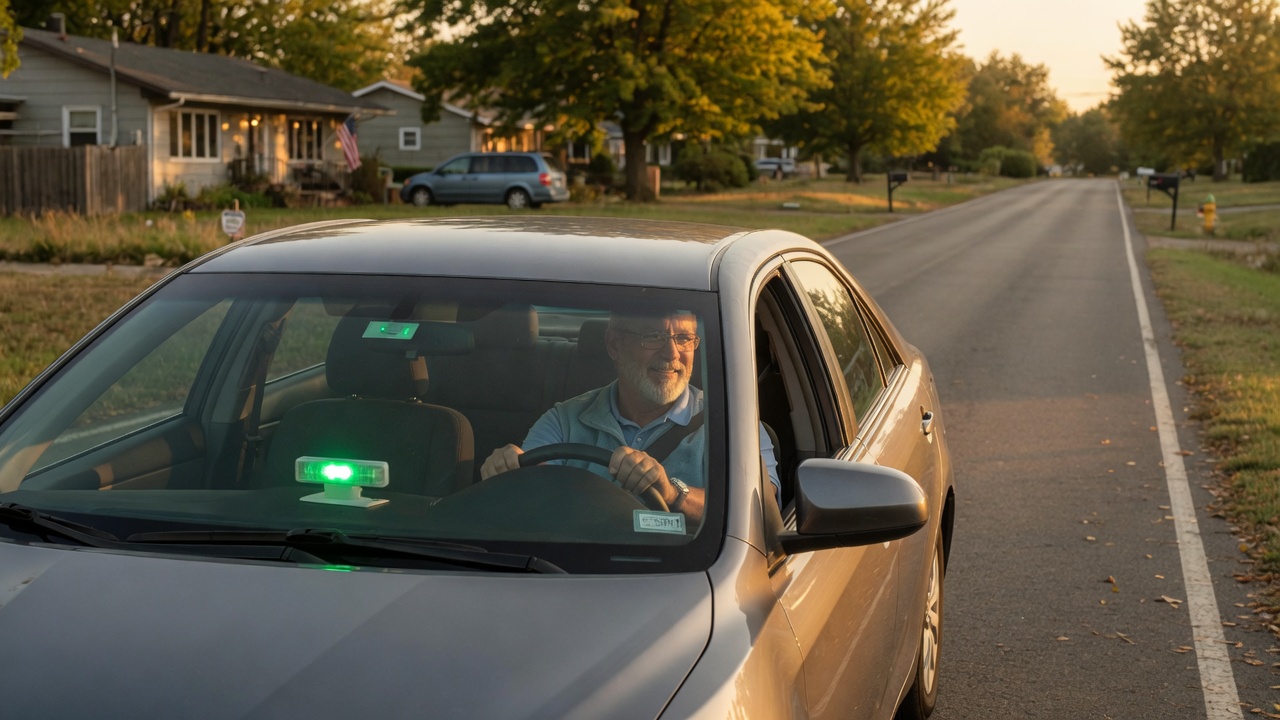
You’re sitting at a red light on an ordinary afternoon, maybe running a quick errand or heading home after a doctor’s appointment yourself. In your rearview mirror, a vehicle approaches with a flashing green light instead of the familiar red and blue you expect from an ambulance or police car. For a moment, you wonder what it means and whether you should do something different.
Most drivers recognize red and blue flashing lights right away. They signal true emergencies where every second counts. A flashing green light works differently. It appears in certain regions on specific vehicles connected to medical care, but it does not carry the same legal weight or urgency as traditional emergency lights.
What a Flashing Green Light Usually Means
In many places, a flashing green light on a personal vehicle or smaller transport van often identifies a volunteer emergency medical responder. These are ordinary people, sometimes your neighbors, who have trained as EMTs or ambulance volunteers. When a call comes in, they head out in their own car or a designated vehicle to reach the scene or the station.
The green light helps other drivers notice them more easily as they make their way through traffic. It serves as a quiet request for awareness rather than a demand for immediate action. In some areas, similar signals may appear on vehicles involved in scheduled medical transportation, such as rides for people who need regular dialysis, chemotherapy, or rehabilitation appointments. The exact rules depend on the state or country, so the meaning can shift slightly from one region to another.
What stays consistent is this: the light is about visibility and courtesy, not about claiming the full rights of an emergency vehicle.
How It Differs from Red and Blue Emergency Lights
Red and blue lights on marked ambulances, fire trucks, or police cars usually come with sirens and legal authority. Drivers are required by law to pull over, stop, or yield right of way in most situations. Those vehicles can sometimes use special privileges to move through traffic more quickly when lives are on the line.
A flashing green light does not grant those same privileges. The driver must still obey every normal traffic law. They cannot speed through red lights, exceed speed limits, or expect other vehicles to clear the road automatically. The light simply lets others know that the vehicle is involved in some form of medical transport or response.
Think of it this way. Red and blue lights signal an emergency and mean clear the way now. A green light simply means this is a medical related trip. A little extra space or patience helps if it is safe for you to give it. The difference matters because it changes how you should react behind the wheel.
Why These Signals Exist on Certain Vehicles
Volunteer responders often leave work, dinner, or sleep when a call comes through. They may be driving their personal car with only a portable green light to identify themselves. Without that light, other drivers might not realize why someone is trying to move through traffic a bit more purposefully.
For scheduled medical transport, the situation is usually calmer but still important. A person heading to dialysis, for example, cannot simply reschedule without serious health consequences. Reliable arrival times help patients manage chronic conditions that require consistent treatment. A green light in those cases can serve as a gentle reminder to surrounding drivers that the vehicle carries someone who benefits from steady progress rather than sudden stops or blocked paths.
In both situations, the goal is the same. It helps medically important trips happen smoothly without creating confusion or unsafe driving behavior from others on the road.
What Should You Do When You See a Flashing Green Light?
The most important rule is simple. Never put yourself or anyone else in danger. Road safety always comes first. With that in mind, here are some practical ways to respond thoughtfully:
- Stay calm and keep your eyes on the road. A flashing green light should not cause sudden braking or sharp lane changes. Take a breath and assess what is actually happening around you.
- If it is safe and easy to do so, consider giving a little extra space. This might mean moving over one lane when traffic allows, or simply maintaining a steady speed instead of slowing unexpectedly. Small gestures like these can help the vehicle keep moving without forcing anyone into risky maneuvers.
- Do not feel pressured to pull over completely. Unlike a siren and red lights, a green light does not legally require you to stop or yield right of way. You are not obligated to clear the path in the same way you would for a full emergency vehicle.
- Avoid blocking or cutting off the vehicle. If you notice one approaching from behind or waiting to merge, try not to sit in a way that makes their path more difficult, especially in heavy traffic or near intersections.
- Remember that conditions matter. On a busy highway during rush hour, the safest choice might be to stay in your lane and drive normally. On a quieter road with room to move over, a small adjustment could make a meaningful difference.
The key is awareness without panic. Most drivers who understand the meaning of the light naturally respond with a bit more patience, and that small shift helps everyone reach their destinations more smoothly.
The People Behind the Light
Behind every flashing green light is a story that touches real lives. It might be a volunteer who just finished their regular job and is now rushing to help a stranger in need. Or it could be a driver whose daily work involves getting patients to treatments that keep them alive and comfortable.
Many people receiving regular medical transport are older adults managing long term conditions. Missing an appointment can mean more than inconvenience. It can affect how they feel for days or even lead to hospital visits that might have been avoided. When drivers around them show a little extra consideration, it supports a system that helps people stay as healthy and independent as possible.
Volunteers add another layer of community care. These individuals give their time and training without always having the resources of a full time emergency crew. A flashing green light lets others recognize their role without requiring dramatic action from every driver on the road.
When you see that light, you are witnessing one small part of how communities look after one another. It is not dramatic like a siren, but it quietly connects people who need help with the people willing to provide it.
Staying Safe and Considerate at the Same Time
Understanding these signals reduces confusion on the road. When drivers know what a green light means, they are less likely to react with sudden movements or unnecessary worry. That clarity benefits everyone, especially during times when traffic already feels stressful.
At the same time, it is worth repeating that no light, green or otherwise, should ever lead you to make an unsafe choice. If moving over would require cutting across multiple lanes or braking hard in heavy traffic, it is better to stay steady and let the situation unfold naturally. The driver with the green light is also responsible for operating safely and legally.
Traffic works best when everyone stays alert, follows the rules, and treats one another with basic respect. A flashing green light simply adds one more layer of information that can help good drivers make thoughtful decisions.
A Small Signal with a Human Purpose
The next time you notice a flashing green light while stopped at a red light or moving through traffic, you will have a clearer picture of what it represents. It is not a full emergency command, but it does mark a vehicle connected to medical needs, whether a volunteer heading to help or transport supporting someone’s ongoing care.
Responding with calm awareness rather than confusion or overreaction makes the roads a little kinder for everyone involved. You do not need to do anything dramatic. Often, the most helpful thing is simply noticing, understanding, and continuing to drive safely while leaving a bit of extra room when conditions allow.
That small moment of recognition connects back to something larger. It is one of the quiet ways people in every community try to look after one another. A flashing green light is one of those small signals that reminds us there is usually more going on behind the wheel than we can see at first glance.
And when we respond to it with patience instead of panic, we become part of that same quiet effort to keep everyone moving forward safely.
Important Note:
This article is written for entertainment and general informational purposes only. The stories, ideas, and information shared here are meant to be interesting, thought-provoking, or enjoyable to read.
Nothing in this article should be considered professional advice of any kind — whether medical, legal, financial, psychological, or otherwise. The content on this blog is not a substitute for consulting with qualified professionals.
Always do your own research and speak with a trusted expert before making any important decisions in your life. The author and publisher of this blog are not responsible or liable for any actions you take (or do not take) based on the information in this article.
Information and stories may be based on personal experiences, public sources, or creative interpretation. While we aim to share content that is accurate and respectful, we cannot guarantee that everything will be completely up to date or suitable for every reader’s situation.
By continuing to read this blog, you understand and agree that this content is for entertainment only.
Leave a Reply