The Sailor by the Shore
Have you ever looked at an old drawing and felt like something was quietly waiting for you to notice it? There is a special kind of pleasure in those moments when a hidden detail suddenly comes into focus. It feels a little like finding a small treasure that was there all along, only you needed to slow down and look in just the right way.
One classic illustration that has brought that quiet delight to generations of viewers shows a sailor standing near the water, peering out across the distance through a long telescope. At first it seems like a simple, peaceful scene. Yet tucked inside the lines and shapes is another figure, one that most people miss on their first look. Once you see her, though, everything changes.

Most viewers notice the sailor immediately. He stands out clearly, and our eyes naturally go to the most obvious figure first. That is exactly how these puzzles are designed to work. The artist has hidden something more within the very same lines that create the sailor and the landscape around him. The challenge is not about being clever. It is about giving yourself permission to look again, a little differently this time.
Why These Old Puzzles Still Feel So Satisfying
Hidden figure drawings like this one have been enjoyed for many years. Long before screens filled our days, families would gather around a newspaper or magazine and pass the page from one person to the next. Someone would call out when they found the hidden shape, and soon everyone was leaning in, trying to see what the others had spotted. There was laughter and friendly teasing, and often a small sense of triumph when the hidden person finally appeared.
What makes the experience so pleasant is the way it works with how our minds see the world. We are built to recognize familiar patterns quickly, so the sailor comes into view right away. The second figure is formed from the spaces and edges that our eyes first treat as background. When we soften our focus or shift where we look, those same shapes can suddenly become a face, a dress, or a figure standing quietly beside the man with the telescope.
It is a gentle reminder that sometimes we need to look past what seems obvious. The extra detail was never missing. It was simply waiting for us to notice it in a new way. In a busy world, these small moments of discovery can feel surprisingly comforting.
Helpful Ways to Look for the Hidden Wife
If you have not found her yet, that is completely normal. Many people need a few extra moments and a few gentle suggestions before she comes into view. Here are some friendly ways to explore the drawing.
First, try not to stare only at the sailor himself. Let your eyes move across the whole picture, especially the large white area to his side and the space around the lower part of the telescope. Sometimes the hidden figure uses those open spaces as part of her shape.
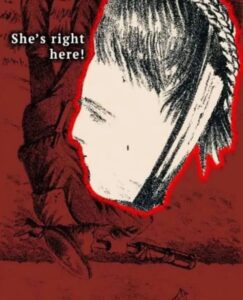
Next, look for the outline of a head and face in profile. She is not standing out in the open. Instead, the artist has used the meeting point between the telescope stand and the sailor’s legs and coat to form her features. If you relax your gaze a little, almost as if you are looking through the picture rather than at it, the lines may begin to settle into the shape of a woman’s face.
Some people find it helpful to view the image from a slight distance or even turn their head gently to one side. Others notice that looking toward the bottom of the telescope area reveals the profile more clearly. There is no single correct way. The joy comes from the moment your own eyes make the connection.
Take your time with each suggestion. These puzzles were never meant to be rushed. They were created for quiet moments when you can sit with a cup of tea and let your attention wander in a peaceful way. Many readers say the more they look, the more the picture seems to open up.
The Moment She Appears
Then, all at once, she is there. You see the profile of a woman with her hair drawn back, her face formed by the very lines you had been studying. She was present in the drawing the entire time, yet she stayed quiet until your eyes were ready to receive her. Many people describe a small rush of warmth or surprise when it happens. It feels almost like she had been watching you look for her.
Once you have seen her, it becomes difficult to look at the picture without noticing her as well. Your mind has learned a new way to arrange the shapes, and it holds on to that new understanding. That lasting shift is part of what makes these illusions so memorable. They show us, in a simple and friendly way, that seeing is something we do actively, not something that simply happens to us.
What These Puzzles Gently Remind Us
There is something quietly meaningful about this kind of discovery, especially as the years go by. We all have moments when we believe we already know everything there is to see in a familiar face, a long-married spouse, or a place we have visited many times. Then something small shifts, and we notice a detail we had overlooked for years. It might be a certain expression, a quiet strength, or a new way the light falls across a room we thought we knew completely.
The sailor and his hidden wife offer a small, wordless lesson in that same spirit. They suggest that it is never too late to look again, and that the extra glance is often worth the effort. The things that matter most are sometimes right in front of us, formed from the very lines of our ordinary days, waiting for a little more attention. In long relationships especially, the support and presence of the other person can become so familiar that we almost stop seeing it. A puzzle like this gently brings that idea back to mind.
Why We Keep Coming Back to These Old Drawings
Part of the charm lies in their simplicity. You do not need any special tools or training. All that is required is a willingness to slow down and stay curious for a few extra minutes. In a time when so much of life moves quickly, these quiet visual surprises feel grounding. They invite us to enjoy the process of looking rather than racing toward an answer.
Many people like to share them with family members across generations. A grandmother might spot the hidden wife first and smile at the memory of similar puzzles from her own childhood. A grandchild might point her out with excitement, and suddenly the whole family is gathered around the screen or the printed page, sharing the small victory together. Those moments of gentle connection are what keep these old illustrations alive and loved.
The artist who created this scene understood something important about how we see. By placing one figure inside the lines of another, they created a picture that rewards patience and a second look. The sailor keeps searching the horizon, and right beside him, or perhaps within the very space he occupies, his wife has been there all along.
So the next time you come across a drawing like this one, whether it shows a sailor by the water or another scene entirely, give yourself the gift of a little extra time. Look past the first obvious shape. Let your eyes wander into the spaces between. You never know what quiet surprise might be waiting for you when you decide to look just a little closer than before.
These small discoveries have a way of staying with us. They remind us that wonder does not always require something brand new. Sometimes it is simply a matter of seeing what has been there, patiently, the whole time.
Important Note:
This article is written for entertainment and general informational purposes only. The stories, ideas, and information shared here are meant to be interesting, thought-provoking, or enjoyable to read.
Nothing in this article should be considered professional advice of any kind — whether medical, legal, financial, psychological, or otherwise. The content on this blog is not a substitute for consulting with qualified professionals.
Always do your own research and speak with a trusted expert before making any important decisions in your life. The author and publisher of this blog are not responsible or liable for any actions you take (or do not take) based on the information in this article.
Information and stories may be based on personal experiences, public sources, or creative interpretation. While we aim to share content that is accurate and respectful, we cannot guarantee that everything will be completely up to date or suitable for every reader’s situation.
By continuing to read this blog, you understand and agree that this content is for entertainment only.
Leave a Reply