A Small Detail Hiding in Plain Sight
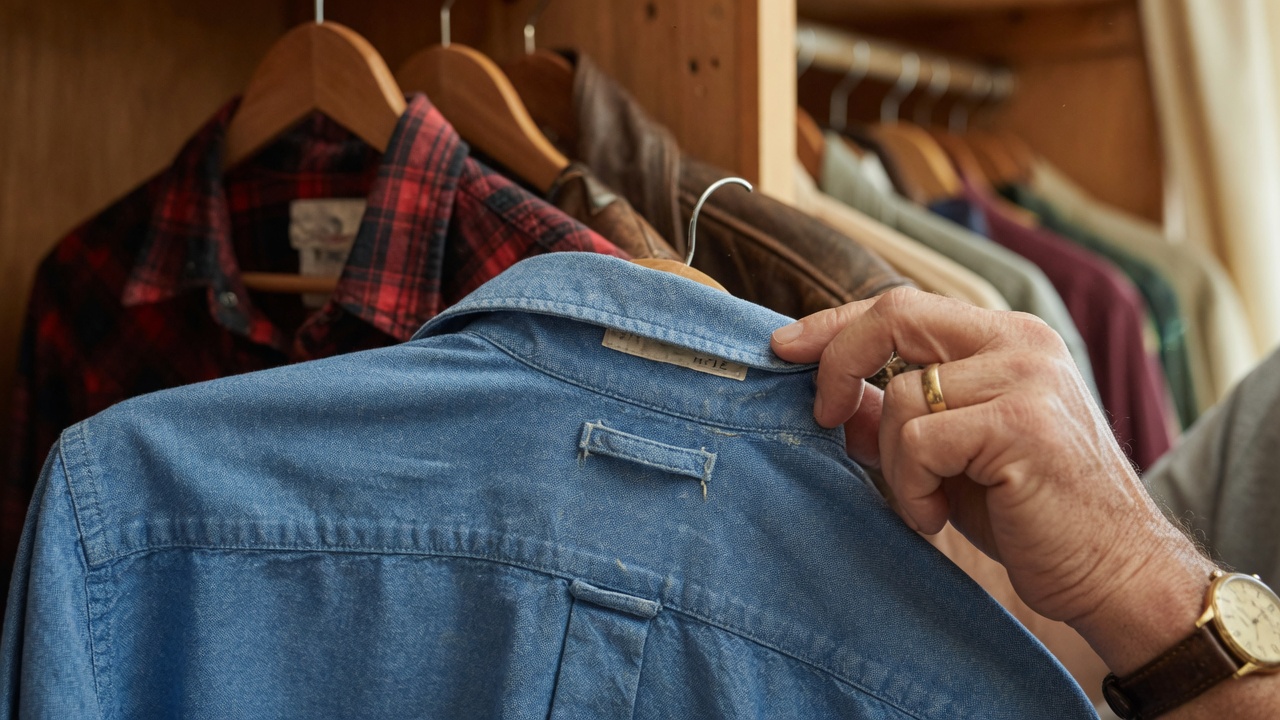
Take a quiet moment and look through your closet today. Pull out a few of your classic button-down shirts. These are the crisp, tailored ones you might wear to a nice dinner or to church. Turn one of those shirts around. Look right below the back of the collar, where the shoulders meet the center pleat. You’ll probably spot a curious little detail.
A small, unassuming loop sits right there, stitched securely into the fabric.
Most of us have noticed this tiny fabric loop at some point. Maybe you felt it brush against your fingers while ironing. Perhaps you absentmindedly tugged on it while folding laundry. We’ve washed, worn, and hung these shirts for decades without giving that loop a second thought.
Many folks assume it’s just a decorative touch. Some think it’s a quirky leftover from the manufacturing process. Others believe tailors use it to guide their stitching. Yet, this little loop has an incredibly rich, practical history. Strict necessity created what looks like a minor design choice. It reminds us how clothing makers used to solve real, everyday problems.
Anchors Aweigh: The Salty Origins of the Locker Loop
We must travel back in time to the early 1900s to understand why that little loop exists. Clothing makers didn’t mass-produce garments the way factories do today. Every stitch, button, and seam had to justify its existence. Function took absolute priority over fashion. This proved especially true for the men serving in the United States Navy.
Life on a naval ship in the early 20th century was rugged and demanding. Sailors lived in incredibly tight quarters below deck. Space remained a luxury that simply didn’t exist. You know this if you’ve ever toured a historic battleship or submarine. There were no spacious walk-in closets. Fancy dressers and delicate wooden hangers were completely absent.
Despite the cramped and salty environment, naval regulations required sailors to maintain a crisp appearance. Their shirts needed to stay clean and dry. They also had to remain as wrinkle-free as possible in some of the most challenging conditions on earth.
Clever shirt makers came up with a simple solution to solve this frustrating storage problem. They added a sturdy, reinforced fabric loop to the back of the collar. Sailors could now hang their garments on the sturdy metal hooks scattered around the ship. They no longer had to fold their shirts into a tiny locker or toss them onto a crowded bunk.
This little invention worked beautifully. It kept the shirts off the damp floor. The loop allowed them to air out after a long day of hard work. It also helped the garments maintain their shape without the need for an ironing board. The detail officially became known as the “locker loop” or the “backstay loop” due to this deeply practical naval origin.
From the High Seas to Main Street
You might wonder how a piece of military utility gear ended up in our everyday wardrobes. The answer lies in the years immediately following World War II.
Millions of soldiers and sailors returned home and brought their military-issued clothing with them. Khaki trousers, white t-shirts, and durable button-downs became part of regular civilian life. People quickly realized how comfortable and incredibly useful these garments were.
The clothing industry soon shifted from wartime production back to consumer goods. Designers noticed that veterans really appreciated the practical features of their uniforms. Button-down shirts grew popular for weekend wear, relaxing at home, and going out with friends. Clothing manufacturers began designing shirts for the general public and simply kept the locker loop.
Most people in the 1950s didn’t actually need to hang their shirts on metal hooks in cramped quarters. We had spacious closets and plenty of wire hangers. Yet, the loop stayed. Designers recognized it as a fantastic, practical feature. It slowly transitioned from a military necessity to a staple of classic American shirt design.
The Ivy League Era: A New Status Symbol
The Navy gave the locker loop its purpose. College students of the 1960s gave it its style. A massive cultural shift happened on college campuses during the late 1950s and into the 1960s. This occurred particularly at Ivy League schools on the East Coast.
A brand named Gant began producing button-down oxford shirts featuring this prominent locker loop. They heavily marketed these shirts to students at universities like Yale and Harvard. Young men quickly adopted them as part of the “preppy” uniform. This clean, polished, yet effortlessly casual look included penny loafers, khaki chinos, and crisp button-downs.
The loop took on an entirely different meaning in this new setting. It no longer acted as a survival tool for sailors. It became a subtle sign of being “in the know.” Wearing a shirt with a locker loop meant you appreciated quality clothing. It served as a quiet nod to traditional craftsmanship.
These young men had plenty of room in their dorm closets. Still, the loop stayed. It added a touch of heritage and authenticity to an otherwise standard garment. High school students and young men across the country soon clamored for shirts featuring the famous loop.
Young Love and Ripped Shirts
The locker loop picked up a charming bit of folklore as it gained tremendous popularity. You might actually remember this wonderful tradition if you were a teenager in the 1960s.
Campus legend says the loop became an interactive part of the dating scene. A young man would leave the loop on his shirt fully intact if he was single. Things changed if he started dating a girl and things got serious. He would carefully snip or rip the loop off the back of his shirt. Removing the locker loop acted as a public declaration that he was “going steady” and officially off the market.
The young woman would respond in a few different, visible ways. She would often wear her boyfriend’s oversized button-down shirt around campus. Perhaps she would wear his class ring on a chain around her neck. Sometimes she would proudly sport his fraternity pin on her sweater. These actions provided a sweet, visible way to show loyalty to one another.
Adding Another Layer to the Legend
This trend naturally led to some funny moments in school hallways. Mischievous girls would sometimes sneak up behind boys they had a crush on. They would try to yank the loop right off their shirts before the boys could react. Some young men wanted to prevent an unexpected tug from ruining their good clothes. They simply started cutting the loops off themselves as soon as they bought the garment.
People debate whether this practice was widespread or just a romantic regional trend. It remains a fun memory either way. This lore added a layer of playful meaning to a small detail. It kept the design culturally relevant for a whole new generation.
Why the Locker Loop is Still Surprisingly Useful Today
We may not be sailing the rough seas on a naval destroyer anymore. Our high school dating days might be comfortably in the past, too. However, the locker loop isn’t just a nostalgic relic. It continues to serve several highly practical purposes in our modern lives.
You might be surprised at how handy a shirt with a loop can be. This century-old feature still shines today in a few wonderful ways:
- Traveling and Road Trips: You won’t always have enough hangers when staying in a hotel room. The loop makes it incredibly easy to hang your shirt on a bathroom hook. You can also use a doorknob without wrinkling the collar.
- At the Gym or Pool: Locker rooms often feature narrow lockers with just a single hook. Hanging your shirt by the loop keeps it safely off the damp floor. This also prevents the fabric from getting crushed inside your gym bag.
- Quick Air Drying: The loop works wonderfully if you prefer to air-dry your high-quality cotton shirts. You can hang the shirt directly on a clothesline or a laundry room hook. It dries beautifully without those awkward shoulder bumps that wire hangers sometimes leave behind.
- Everyday Convenience: You sometimes need to take your shirt off quickly while working in the garden. The loop gives you a reliable way to hang it up on the back of a door. Mudroom hooks work perfectly for this quick storage, too.
Caring for Good Clothes: A Nod to the Past
We grew up in an era where people mended their clothes instead of throwing them away. You probably remember your mother or grandmother meticulously darning socks. Perhaps you recall the distinct smell of heavy starch on a Sunday morning. Clothing was a serious investment back then.
The locker loop represents that exact, careful mindset. It exists solely to protect the garment. Using the loop prevents the collar from losing its crisp shape. It keeps the back pleat looking sharp and tailored. Taking good care of our belongings brings a deep, quiet sense of satisfaction.
We honor the hard work of the people who made these items when we treat them well. We also save money by helping our favorite shirts last for decades. The locker loop makes that gentle care just a little bit easier.
The Mark of True Craftsmanship Today
Not every button-down shirt on the market today includes this loop. The clothing industry has changed drastically over the past few decades. Many manufacturers try to cut costs wherever possible with the rise of fast fashion. Shaving a few pennies off production by removing extra fabric loops has become standard practice. Budget brands often rely on cheaper buttons and fewer details.
Finding a locker loop on a modern shirt is often a strong indicator of the garment’s quality because of these industry changes. Traditional, heritage brands still take pride in their tailoring and history. They continue to include the loop as a signature of true craftsmanship.
Seeing the loop today means looking at a very deliberate design choice. Some skilled tailors use matching fabric so the loop blends in beautifully. Other designers might use a contrasting thread color to make the loop stand out. This proudly shows off the classic lineage of the shirt.
A Little Piece of History You Can Wear
We often begin to slow down and truly appreciate thoughtful details as we get older. We notice the sturdy dovetail joints in an old piece of furniture. A vintage cast-iron skillet provides a comforting, familiar weight. We admire the neat, careful stitching on a well-made piece of clothing.
That tiny loop on the back of a button-down shirt serves as a brilliant example. It shows how practical design from our past can still hold value today. This little fabric strip stands as a quiet reminder that good design is built to last.
Shirt makers created this feature to solve a frustrating problem for brave sailors over a hundred years ago. It continues to serve a purpose in our modern, fast-paced lives. The loop survived wars and the changing tides of civilian fashion. It even survived the tugging hands of lovestruck teenagers in the 1960s.
Take a quick peek at the back of your collar the next time you do laundry. Look for it when getting dressed for a special occasion, too. You’ll know its wonderful secret if you see that little fabric loop resting there. Manufacturers didn’t add a random decoration or make a mistake at the factory.
You’re looking at the locker loop. This tiny, durable piece of American history continues to carry a quiet sense of usefulness. It retains a traditional style more than a century after someone first dreamed it up. Sometimes, the most magnificent stories hide in the quietest, smallest details.
Important Note:
This article is written for entertainment and general informational purposes only. The stories, ideas, and information shared here are meant to be interesting, thought-provoking, or enjoyable to read.
Nothing in this article should be considered professional advice of any kind — whether medical, legal, financial, psychological, or otherwise. The content on this blog is not a substitute for consulting with qualified professionals.
Always do your own research and speak with a trusted expert before making any important decisions in your life. The author and publisher of this blog are not responsible or liable for any actions you take (or do not take) based on the information in this article.
Information and stories may be based on personal experiences, public sources, or creative interpretation. While we aim to share content that is accurate and respectful, we cannot guarantee that everything will be completely up to date or suitable for every reader’s situation.
By continuing to read this blog, you understand and agree that this content is for entertainment only.
Leave a Reply