Remember That Loaf That Went from Soft to Rock-Hard Overnight?
Oh, we’ve all been there, haven’t we? You pick up a beautiful fresh loaf from the bakery or the store, maybe thinking about sandwiches for the week or that special French toast for the grandkids. Then, before you know it, it’s sitting on the counter looking a little sad—hard, crusty, and not quite what it used to be. You find yourself wondering: “Is this stale bread still safe, or should I just toss it?”
It’s such a common kitchen dilemma, especially for those of us who grew up learning not to waste a single crumb. The good news is that in most cases, that stale bread is perfectly fine to enjoy in one way or another. But there’s a big difference between bread that’s simply lost its softness and bread that’s gone off in a way that could cause trouble. Let’s talk through this together, like we’re chatting over a cup of coffee in the kitchen. No fuss, just helpful, practical advice for making the most of what we have.
Stale Bread vs. Moldy Bread: Understanding the Difference
Stale bread happens because the loaf has lost moisture over time. That wonderful soft texture disappears as the starches inside the bread go through a natural process called retrogradation—they sort of recrystallize and push out water. It’s not harmful at all; it just changes the feel and taste. Many of us remember our parents or grandparents turning day-old bread into something delicious rather than letting it go to waste.
Moldy bread, on the other hand, is a different story. Those fuzzy green, blue, or white spots mean fungi have started growing. Because bread is so porous, those mold spores can spread throughout the entire loaf, even in places you can’t see. It’s simply not worth the risk to try cutting away the bad parts.
For most of us over 50, this brings back memories of careful kitchens where nothing was thrown out lightly. Stale bread can be a friend in the kitchen. Moldy bread? It’s time to say goodbye and protect our health.
Yes, Stale Bread Is Usually Safe—Here’s Why and How to Enjoy It
The simple answer is yes—stale bread without any signs of mold is safe to eat. It might not be as pleasant straight from the bag, but it hasn’t gone bad in a dangerous way. Many food experts remind us that best-before dates are about quality, not safety. As long as it smells and looks okay aside from the hardness, you’re good to go.
One of the kindest things about stale bread is how well it works in so many comforting recipes. Fresh bread can sometimes fall apart or get too soggy, but day-old or older bread holds up beautifully and soaks up flavors just right.
Simple Ways to Bring Stale Bread Back to Life
Before you turn it into something new, try reviving it:
- Warm it gently in the oven: Wrap the loaf or slices in foil and pop it into a 350°F oven for about 10 minutes. The steam trapped inside helps soften the crumb again. It won’t be bakery-fresh, but it’s often good enough for butter and jam.
- Toast it: Stale bread makes some of the best toast because it crisps up evenly without getting too soft in the middle.
These little tricks have saved many a loaf in my own kitchen over the years, and they can save you money while cutting down on waste—something that feels especially good these days.
Wonderful Ways to Use Stale Bread in Your Kitchen
Stale bread isn’t just safe—it can become the star of some truly heartwarming dishes. Here are some favorites that many of us remember from family tables:
Classic Comfort Foods
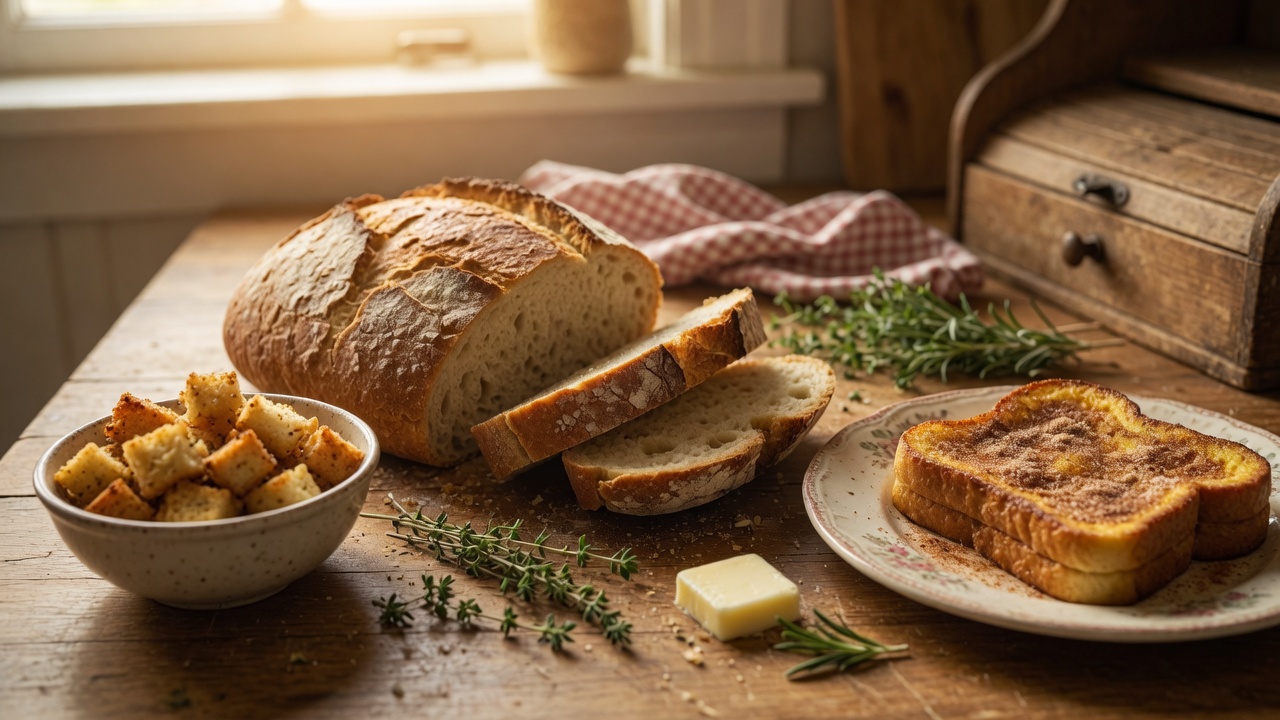
French Toast or Bread Pudding: This is where stale bread truly shines. It soaks up the eggy custard mixture without turning to mush. Imagine waking up to warm French toast on a weekend morning, or a cozy bread pudding dotted with raisins and a touch of cinnamon—pure comfort food that feels like a hug.
Stuffing or Dressing: Whether it’s for holiday meals or a simple Sunday chicken dinner, stale bread makes the best stuffing. It absorbs broth and seasonings beautifully and gives you that perfect texture everyone loves.
Everyday Practical Ideas
Homemade Croutons: Cube the bread, toss with a little olive oil, salt, herbs, and garlic powder, then bake until golden. They turn ordinary salads or soups into something special. Keep a jar on the counter for quick meals.
Breadcrumbs: Dry the bread further if needed, then pulse in a food processor. Use them for meatloaf, casseroles, topping macaroni and cheese, or coating chicken cutlets. They store well in the freezer too.
Panzanella Salad: An Italian favorite that’s perfect for summer. Toss bread cubes with juicy tomatoes, cucumbers, onions, basil, and a simple vinaigrette. The bread soaks up all those lovely juices and becomes chewy and delicious.
More Creative Options
You can also try ribollita (a hearty Tuscan soup), strata (a savory bread casserole with eggs and cheese), or even Spanish migas with chorizo and greens for something a bit different. The possibilities are warm and welcoming—many recipes were practically designed for bread that’s past its first day.
These ideas not only taste wonderful but also bring a sense of satisfaction. Turning something that might have been wasted into a family favorite feels good for the heart and the wallet.
When to Say Goodbye: The Truth About Moldy Bread
If you spot any mold, it’s best to throw the whole loaf away. Bread’s airy structure lets mold spread invisibly. Eating even a small amount can lead to allergic reactions, respiratory issues, or upset stomach for some people, especially those with sensitivities. Certain molds produce mycotoxins that are better avoided altogether.
It’s not worth taking chances with our health, particularly as we get older. Better to compost it or toss it responsibly and start fresh. Many of us have learned the hard way that “just cutting off the bad part” isn’t always safe with soft, porous foods like bread.
How Long Does Bread Last Before It Molds?
The timeline depends on a few things:
- Fresh bakery bread without preservatives: Often just 2-3 days at room temperature.
- Store-bought bread with preservatives: Can last a week or longer in the bag.
- Homemade bread: Similar to fresh bakery loaves—use it quickly or freeze it.
Warm, humid kitchens speed things up, while cooler, drier spots slow mold down. Always trust your senses: if it smells off or looks suspicious, it’s time to let it go.
Smart Storage Tips to Keep Your Bread Fresher Longer
Storing bread is a bit of a balancing act between preventing mold and slowing staling. Here’s what works well for most homes:
- Room temperature for short term: Use a bread box or paper bag. This allows a little air circulation without trapping too much moisture.
- Freezing for longer storage: Slice the loaf first, wrap tightly in foil or plastic, then place in a freezer bag. You can take out just what you need and toast straight from frozen. This stops both staling and mold for months.
- Avoid the fridge most of the time: Cold temperatures actually make bread stale faster. Only refrigerate if your kitchen is very warm or humid and you’re using the bread soon.
Keep bread away from direct sunlight and heat sources. For artisan loaves like sourdough, sometimes just placing the cut side down on a board works surprisingly well for a couple of days.
Tips for Different Types of Bread
Artisan and crusty breads do well in paper or a bread box at room temperature. Sandwich loaves often come in plastic—keep them sealed but move extras to the freezer. Homemade loaves without preservatives need quick use or freezing. A little planning goes a long way toward less waste and more enjoyment.
Making the Most of Every Loaf
Next time you see that stale bread on the counter, take a moment to check it carefully. If it’s just dry and firm with no mold, you have options—from reviving it for breakfast to turning it into a hearty meal that brings the family together. If mold has appeared, toss it without guilt and remember the lesson for next time.
There’s something quietly satisfying about stretching our groceries, honoring the effort that went into baking that loaf, and creating new memories around the table. Whether you’re making croutons for a special salad or bread pudding that reminds you of childhood, you’re keeping that spirit of resourcefulness alive—the same one many of us learned from parents and grandparents.
So the next time you’re faced with a less-than-fresh loaf, smile and think of the possibilities. Your kitchen (and your budget) will thank you. What’s your favorite way to use stale bread? I’d love to hear in the comments—maybe we can all share a few more ideas and keep the conversation going.
Important Note:
This article is written for entertainment and general informational purposes only. The stories, ideas, and information shared here are meant to be interesting, thought-provoking, or enjoyable to read.
Nothing in this article should be considered professional advice of any kind — whether medical, legal, financial, psychological, or otherwise. The content on this blog is not a substitute for consulting with qualified professionals.
Always do your own research and speak with a trusted expert before making any important decisions in your life. The author and publisher of this blog are not responsible or liable for any actions you take (or do not take) based on the information in this article.
Information and stories may be based on personal experiences, public sources, or creative interpretation. While we aim to share content that is accurate and respectful, we cannot guarantee that everything will be completely up to date or suitable for every reader’s situation.
By continuing to read this blog, you understand and agree that this content is for entertainment only.
Leave a Reply