Let’s be entirely honest for a moment—none of us consider a visit to a public restroom the highlight of our day. Whether you are stopping at a highway rest area during a family road trip, popping into a department store bathroom, or visiting the facilities at a local museum, the goal is usually the same: get in, do your business, and get out as quickly as possible.
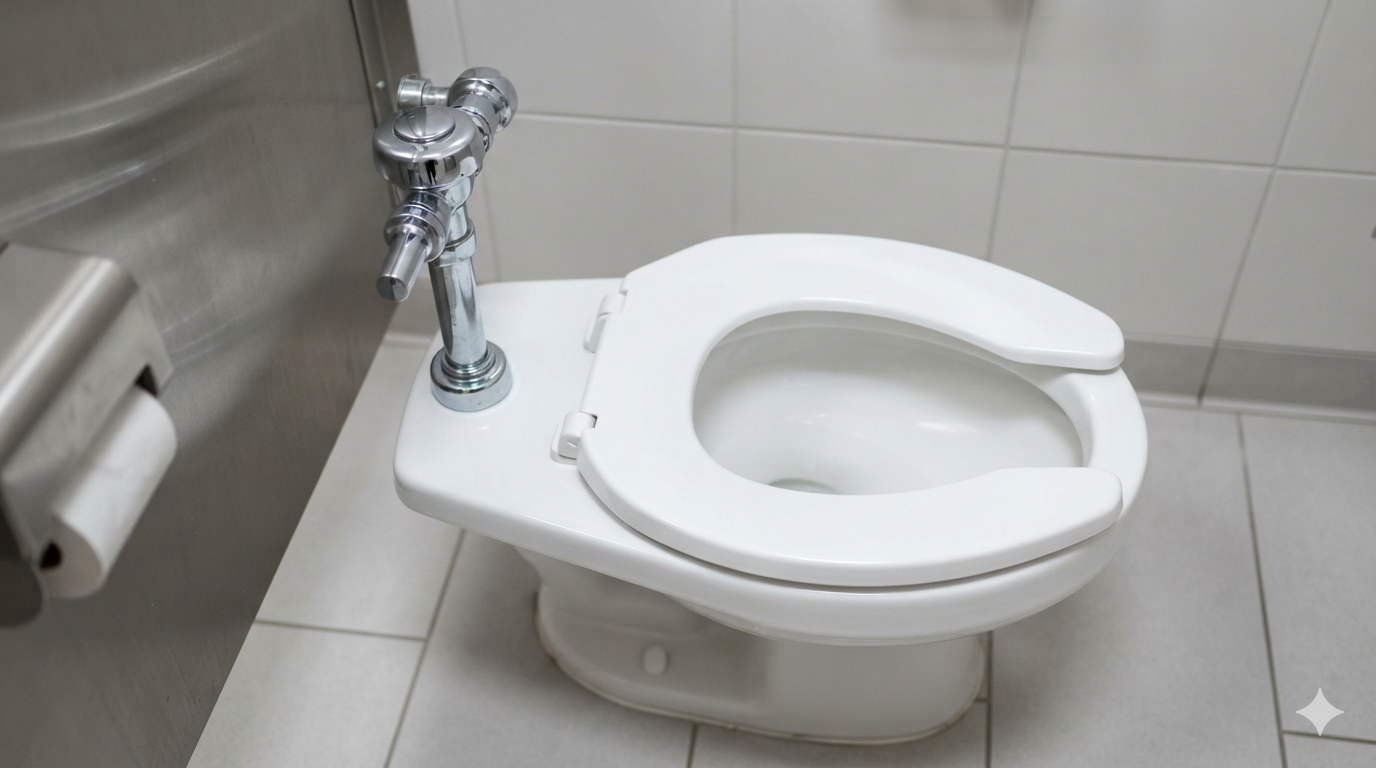
Because we are usually in such a rush to escape, we rarely stop to look around and contemplate the interior design choices of public architecture. But if you have ever paused for just a second before sitting down, you might have noticed a peculiar, universal detail. Public toilet seats almost always feature an open, horseshoe-like shape with a distinct gap right at the front. Meanwhile, the porcelain throne waiting for you back in your cozy home has a nice, solid, fully closed oval seat.
Why the difference? Is it a styling choice? Did a factory somewhere run out of plastic? It turns out that this quirky little gap is not an accident at all. In fact, it is a brilliant piece of engineering, backed by plumbing history, public health laws, and some downright amusing human behavior. Once you discover the real reasons behind the U-shaped toilet seat, you will never look at a public restroom the same way again.
—
The Universal Plumbing Code: Yes, It Is Actually the Law
While it might feel like a casual choice made by building contractors, the U-shaped seat is actually a legal requirement in many parts of the world. In the United States, this design is mandated by the Uniform Plumbing Code (UPC), a set of standards developed by the International Association of Plumbing and Mechanical Officials (IAPMO).
First introduced in the mid-20th century, the code explicitly states that public toilet seats must be of the “open-front type.” This means that when a business or a municipality constructs a public restroom, they cannot simply buy the standard, round seats you find at your local hardware store. They must install the split-front variety to stay compliant with building and safety regulations. But why did regulators write this specific shape into law? It all comes down to a few very practical everyday dilemmas.
—
Reason 1: A Clever Way to Keep Things Hygienic
The primary reason lawmakers and engineers embraced the open-front seat is pure hygiene. Public restrooms see an incredible amount of foot traffic. Hundreds, sometimes thousands, of different people use the exact same stall over the course of a single week. With that volume of use, accidents are bound to happen.
The gap at the front of the seat is specifically placed to give users a bit of extra clearance where they need it most. For gentlemen, the open front provides a bit of necessary space, reducing the likelihood of accidental splashing directly onto the seat. For ladies, the open front is designed to make a completely different daily task much cleaner.
The open gap allows women to wipe after using the facilities without their hands or the toilet tissue coming into direct contact with a potentially contaminated plastic surface. By removing that front section of the seat, the design significantly reduces the surface area that can collect germs, making the entire experience just a little bit safer and more comfortable for everyone involved.
—
Reason 2: Making Life Easier for the Hardworking Cleaning Crew
Think about the last time you cleaned your bathroom at home. It is nobody’s favorite chore, but it is manageable. Now, imagine having to clean dozens of bathrooms every single day in a bustling airport or a crowded shopping mall. It is a monumental task, and the people who keep these facilities sparkling deserve all the help they can get.
The U-shaped seat is a wonderful hidden blessing for janitorial staff. Because there is no front hinge or continuous plastic rim, there are fewer tight crevices where moisture, dirt, and bacteria can hide. Custodians can quickly and thoroughly wipe down the seat with disinfectant without having to scrub at awkward, hard-to-reach angles. A design that is easy to clean means the bathroom stays cleaner for longer, which is a win-win for the staff and the public.
—
Reason 3: The Hilarious Reality of Toilet Seat Theft
Now for the twist you probably did not see coming: people actually steal toilet seats. It sounds like a bizarre urban legend, but facility managers across the globe can confirm that it is a very real, very frustrating problem.
When public restrooms used to feature nice, full oval seats, maintenance crews noticed they would mysteriously vanish from the stalls. Why? Because a standard oval seat fits beautifully on a residential toilet bowl. A dishonest visitor looking for a free home upgrade could simply unscrew the seat, slip it into a bag, and take it home.
The introduction of the U-shaped seat put a swift end to this strange wave of petty crime. Because residential toilets are designed exclusively for closed-front seats, a U-shaped seat looks completely out of place in a private home. It feels institutional and drafty. By making the public seats incompatible with the aesthetic of a cozy home bathroom, designers created a brilliant, built-in anti-theft device. After all, who wants an open-front public toilet seat sitting in their beautiful master bathroom?
—
Reason 4: Saving Valuable Pennies on Public Budgets
While a single toilet seat might not seem like a massive expense, think about the scale of a major university, a sprawling hospital, or an entire park system. When you are purchasing plumbing fixtures for hundreds of stalls at a time, every single penny counts. Public budgets are often tight, and managing taxpayer or corporate money wisely is a top priority.
If you look closely at a U-shaped seat, you will realize it uses significantly less plastic or heavy-duty resin than a fully enclosed oval seat. By shaving off that front section, manufacturers use fewer raw materials during production. This makes the open-front seats cheaper to manufacture, cheaper to ship, and cheaper for property owners to buy in bulk. Over decades of building and maintaining public infrastructure, those minor savings add up to thousands of dollars saved.
—
The Evolution of Comfort: Why Home Toilets Stay Closed
With all these wonderful benefits, you might wonder why we haven’t adopted the U-shaped seat at home. Why do we continue to buy solid, closed ovals for our private bathrooms?
The answer comes down to our differing priorities when we are in public versus when we are at home. In a public setting, we prioritize speed, sanitation, and durability. We are not planning to get comfortable; we just want to finish up and wash our hands.
At home, however, our bathroom is a private sanctuary. We value comfort, warmth, and a sense of familiarity. A fully closed oval seat distributes weight more evenly and eliminates any chilly drafts from the bowl below. Since we know exactly who is using our home bathroom, we don’t need to worry about the extreme hygiene guardrails required in a bustling transit hub. We can choose comfort over industrial functionality.
—
Other Hidden Genius Features of the Modern Public Restroom
The U-shaped seat is just one piece of a much larger, invisible puzzle of public restroom engineering. The next time you visit a modern public facility, take a look around and appreciate how many clever details are quietly working to keep you safe and clean:
- High-Pressure Flushing Systems: Unlike home toilets that rely on a gravity-fed water tank, public toilets use a pressurized system called a flushometer. This commercial tech uses direct water pressure to clear the bowl instantly, preventing stubborn clogs and keeping the line moving.
- Automatic Infrared Sensors: From the flush valve to the soap dispenser and the water faucet, touchless technology ensures you rarely have to place your hands on a surface that someone else just touched.
- Strategic Door Gaps: Have you ever wondered why bathroom stall doors don’t go all the way to the floor? The open space allows for ventilation, makes cleaning the floors a breeze, and ensures that if someone experiences a medical emergency inside, emergency responders can quickly see and provide assistance.
—
A Little Perspective for Your Next Journey
The world is full of small, thoughtful design choices that quietly make our lives easier, safer, and cleaner without us ever giving them a second thought. The humble U-shaped toilet seat is the perfect example of this hidden innovation. It is an intersection of public health law, industrial economy, and a clever solution to human behavior.
So, the next time you find yourself navigating a busy public restroom during a weekend outing or a long travel day, don’t just rush through with your eyes down. Take a brief moment to look at that open-front seat and smile. You now know the secret history of the porcelain throne. It is a small piece of trivia that shows just how much thought goes into making our shared spaces function beautifully—even in the places we least expect!
Important Note:
This article is written for entertainment and general informational purposes only. The stories, ideas, and information shared here are meant to be interesting, thought-provoking, or enjoyable to read.
Nothing in this article should be considered professional advice of any kind — whether medical, legal, financial, psychological, or otherwise. The content on this blog is not a substitute for consulting with qualified professionals.
Always do your own research and speak with a trusted expert before making any important decisions in your life. The author and publisher of this blog are not responsible or liable for any actions you take (or do not take) based on the information in this article.
Information and stories may be based on personal experiences, public sources, or creative interpretation. While we aim to share content that is accurate and respectful, we cannot guarantee that everything will be completely up to date or suitable for every reader’s situation.
By continuing to read this blog, you understand and agree that this content is for entertainment only.
Leave a Reply