That Little Worry Before You Lock the Door
Hey friend, you know that feeling. You’ve finally packed the bags, double-checked the tickets, and you’re standing at the front door ready for a well-earned getaway. Then it hits you — what about the house? Will everything smell okay when you get back? Will there be any surprises waiting in the kitchen or bathroom?
That’s exactly why one clever-sounding tip has been making the rounds online: placing a sheet of paper with an upside-down glass over your sink drain before you leave. People say it keeps nasty sewer smells and even creepy-crawly bugs from sneaking into your home. It sounds simple and smart, right? Like something our parents or grandparents might have passed along.
As someone who loves sharing practical ideas that make life a little easier, I took a closer look. Let’s talk about what’s really going on with your drains, why this popular hack caught on, and — most importantly — what actually works when you’re away for a week or longer. No scare tactics, just gentle, useful advice from one homeowner to another.
Meet the Unsung Hero Under Your Sink: The P-Trap
Under almost every sink, shower, tub, and floor drain in your house sits a simple but brilliant piece of plumbing called a P-trap. It’s that curved, U-shaped pipe that looks a bit like the letter P lying on its side. You’ve probably seen it if you’ve ever had to fix a clog.
Its real job isn’t just catching your wedding ring or a clump of hair. The P-trap holds a small pool of water that creates a natural seal. This water barrier stops sewer gases, unpleasant odors, and even insects from traveling up the pipes into your living space. It’s quiet, effective, and has been doing its job for generations.
Here’s where the trouble starts when you head out of town. If no one runs water through those drains for days or weeks, that protective water slowly evaporates. No water means no seal. Suddenly, you could return from a relaxing trip to a house that doesn’t smell quite right. In dry or hot climates, or with rarely used basement drains and guest bathrooms, this can happen even faster — sometimes in just a couple of weeks.
It’s easy to understand why people started experimenting with ways to protect that seal. We all want to come home to a fresh, welcoming house after time away.
The Viral Paper-and-Glass Trick: Cute Idea, But Does It Hold Up?
You’ve probably seen the photos: a nice sheet of paper covering the drain with a drinking glass turned upside down on top. The idea is that the paper absorbs moisture and acts as a barrier while the glass holds everything in place. It looks resourceful and homemade — the kind of tip that feels like it should work.
In theory, covering the drain should slow evaporation and block anything from coming up. And some folks swear by variations of this, like using a damp paper towel.
The glass rarely creates a tight seal against the sink, so air and humidity can still sneak around the edges. The paper can get soggy from moisture in the air and slide around if there’s any movement — maybe from a curious pet, a draft, or even the house settling. What starts as a thoughtful precaution can end up looking more like forgotten kitchen clutter than reliable protection.
Many experienced homeowners and plumbers have found it’s not the most dependable solution for longer trips. It’s creative, and the heart is in the right place, but there are steadier ways to keep things fresh without the worry.
The Better Way: Easy Steps to Protect Your Drains Before You Go
The good news? Taking care of your drains doesn’t require fancy tools or much time. A few thoughtful minutes before you leave can make all the difference when you walk back through the door.
Step 1: Give Every Drain a Fresh Drink of Water
Start simple. Before you head out, run water in every sink, shower, and tub for 10 to 20 seconds. Don’t forget the laundry room, basement floor drains, and flushing every toilet. This refills all those P-traps with fresh water and restores that important seal.
It’s quick, costs nothing, and gives you such peace of mind. Think of it as tucking your home in for a nap while you’re away.
Step 2: Seal the Drains Thoughtfully
For trips longer than a week or two, go a step further:
- Use the built-in stoppers and make sure they fit snugly.
- Pick up inexpensive, reusable silicone drain covers — they’re gentle on sinks and work beautifully.
- In a pinch, plastic wrap secured with painter’s tape creates a nice temporary barrier.
The goal is to reduce airflow and help that water stay put longer.
Step 3: The Mineral Oil Secret (A Tip from the Pros)
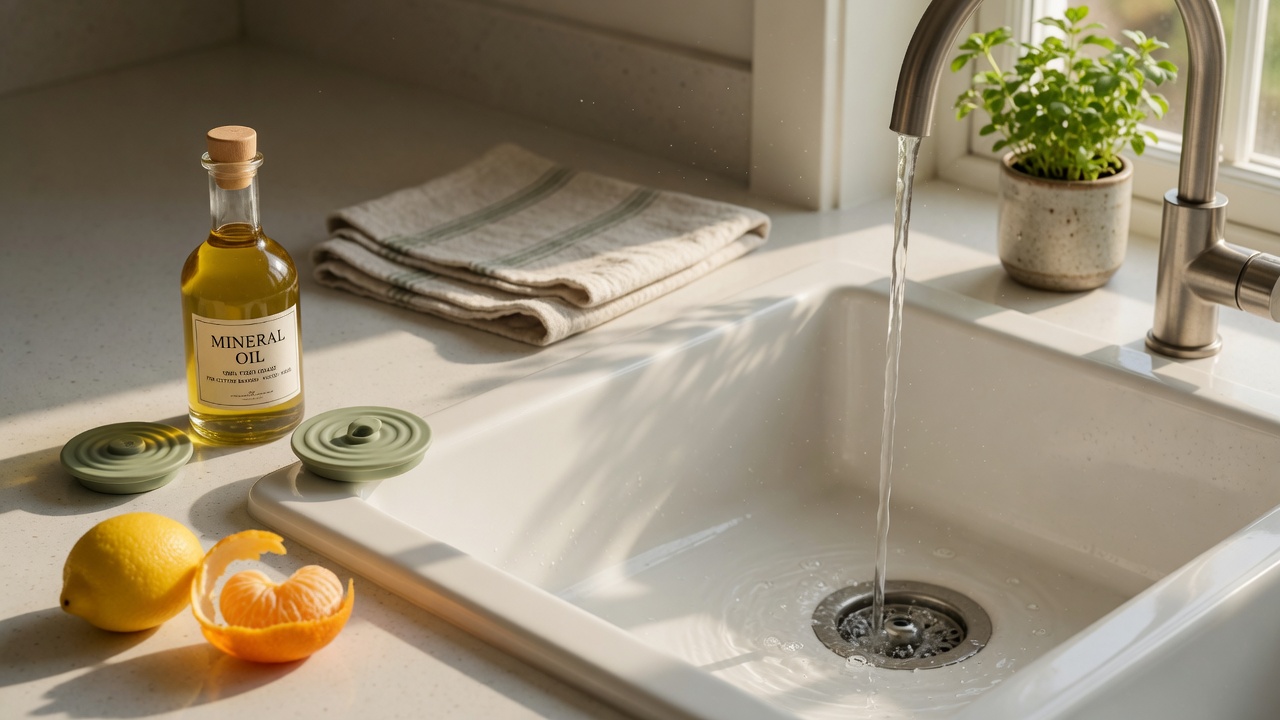
Here’s a wonderful trick shared by many plumbers over the years: After running the water, pour a small amount — about a tablespoon or two — of mineral oil down each drain. It floats on top of the water and slows evaporation dramatically.
Important: Always use plain mineral oil from the pharmacy or grocery store. Never use vegetable or cooking oil, which can spoil and cause clogs later. This gentle layer can keep things protected for weeks or even months, depending on conditions. It’s one of those quiet, old-school solutions that just works.
More Gentle Ways to Keep Your Home Happy While You’re Away
While you’re already thinking about the sinks, why not knock out a few more easy tasks? These small steps add up to a much more comfortable homecoming.
Empty the trash cans and give your garbage disposal some love. Run a few ice cubes and citrus peels through it for a fresh scent. Old food scraps left behind can become smell magnets faster than you’d think.
If you’re traveling in colder months, check that pipes in any unheated spaces are properly insulated. Some folks even shut off the main water valve (after draining the pressure by opening a faucet) as extra protection against leaks.
Consider asking a trusted neighbor or house sitter to pop in once a week to run the taps for a minute or two. It’s like having a friend check on things while you’re making memories elsewhere.
Why These Little Things Matter More Than You Might Think
I’ve heard from so many people over the years who came home from a lovely trip only to be greeted by an unpleasant odor or even an unwelcome visitor from the drains. One couple returned after a month away to find their basement smelled strongly — not the welcome they were hoping for after relaxing on the beach.
It’s easy to overlook drain prep when you’re busy stopping the mail, arranging plants, or worrying about the pets. But once that water seal breaks, issues can build quickly, especially in warmer or more humid parts of the country. Bacteria love those conditions, and bugs can sometimes find their way through open pathways.
Avoid common pitfalls like depending only on the glass trick, forgetting those out-of-the-way drains, or using the wrong type of oil. Small, consistent habits make such a difference.
Coming Home Should Feel Good
The paper and upside-down glass idea started with good intentions and a basic understanding of how P-traps work. But in everyday homes, it often falls short compared to these proven, straightforward steps.
Skip the gimmicks and give your drains the simple care they need. Run the water, add a touch of mineral oil where it makes sense, and seal things up gently. When you pull into the driveway after your adventure, you’ll be greeted by a home that still feels cared for — fresh, quiet, and ready for you to settle back in.
Your future self will thank you. And who knows? You might even share these tips with your own grown kids or neighbors the next time they mention heading out of town.
Safe travels, dear friend. May your trips be joyful and your homecomings peaceful.
What about you? Have you ever dealt with drain surprises after time away, or do you have a favorite way to prep your house? I’d love to hear your stories in the comments below — we’re all in this together, learning little things that make everyday life smoother.
Important Note:
This article is written for entertainment and general informational purposes only. The stories, ideas, and information shared here are meant to be interesting, thought-provoking, or enjoyable to read.
Nothing in this article should be considered professional advice of any kind — whether medical, legal, financial, psychological, or otherwise. The content on this blog is not a substitute for consulting with qualified professionals.
Always do your own research and speak with a trusted expert before making any important decisions in your life. The author and publisher of this blog are not responsible or liable for any actions you take (or do not take) based on the information in this article.
Information and stories may be based on personal experiences, public sources, or creative interpretation. While we aim to share content that is accurate and respectful, we cannot guarantee that everything will be completely up to date or suitable for every reader’s situation.
By continuing to read this blog, you understand and agree that this content is for entertainment only.
Leave a Reply