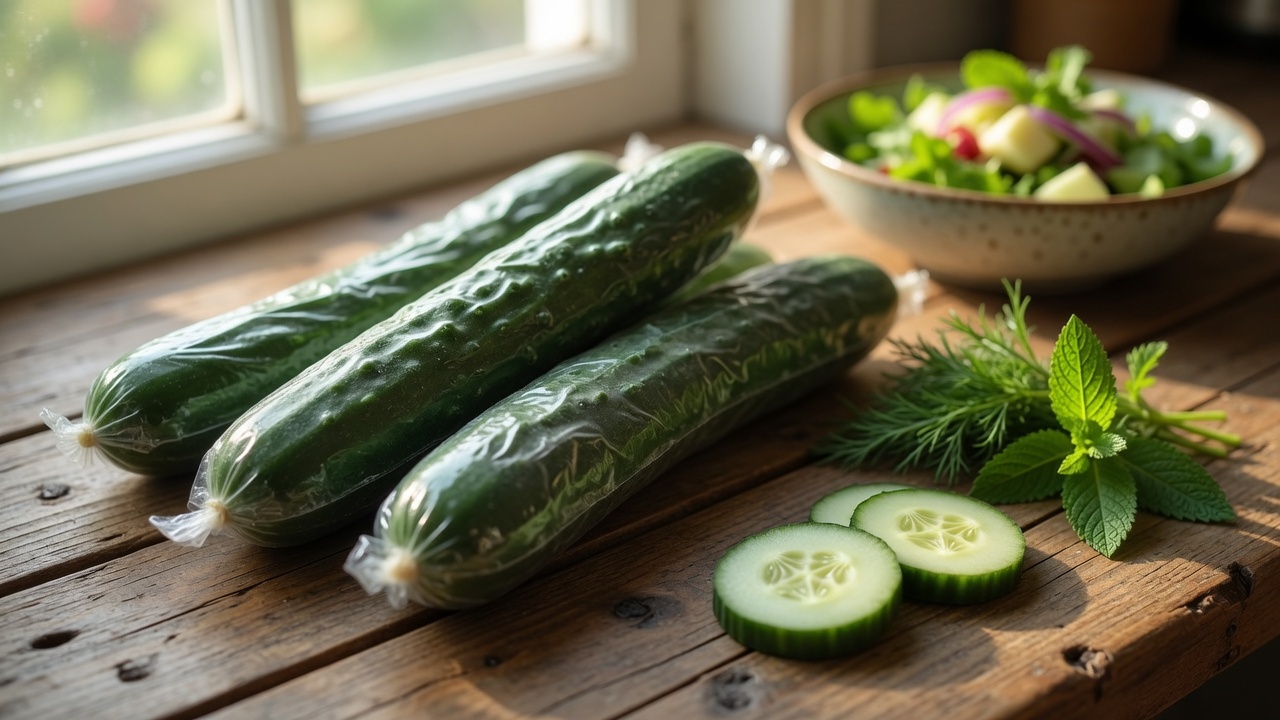
That Long, Neatly Wrapped Cucumber in the Produce Aisle
You’ve probably reached for one many times—those long, slender English cucumbers wrapped snugly in plastic. They look so tidy and fresh compared to the shorter, bumpier ones nearby. Over the years, they’ve become a favorite in many of our kitchens for salads, sandwiches, or a simple healthy snack with a little dip. But have you ever wondered why they come dressed up in all that plastic?
It’s one of those small grocery store mysteries that makes you pause. As someone who’s spent plenty of time in the kitchen preparing meals for family and friends, I’ve come to appreciate the thoughtful reasons behind everyday things like this. Let’s talk about it in a friendly way—what makes English cucumbers special, why the wrapping matters, and how to make the most of them at home.
What Makes English Cucumbers Different?
English cucumbers, sometimes called hothouse or seedless cucumbers, stand out from the regular slicing varieties we grew up with. They tend to be longer, narrower, and straighter, with thinner skin and very few seeds. This gives them a milder, almost sweet flavor that many of us find more refreshing and easier on the digestion.
Because they’re often grown in controlled greenhouse environments, they’re protected from rough weather and pests. That careful growing process results in the tender skin and crisp texture we enjoy. But that same delicate nature means they need a little extra help once they leave the farm.
Many of us remember the thicker-skinned cucumbers from backyard gardens or local stands. English ones bring a different, gentler experience to the table—perfect for those light summer meals or when you want something that doesn’t need peeling.
The Practical Reason Behind the Plastic Wrap
The plastic wrapping isn’t just for show. English cucumbers have thin, delicate skin that loses moisture quickly. Without protection, they can wilt, shrivel, or develop bruises during the long journey from greenhouse to store shelf. The plastic acts like a second skin, locking in moisture and keeping air out, which helps them stay crisp and fresh much longer.
It also offers protection from bumps and scrapes along the way, reducing food waste—a concern many of us who remember careful shopping and using every bit of produce can appreciate. By keeping bacteria, dirt, and oxygen away, the wrap helps maintain quality until it reaches your kitchen.
In short, that plastic helps these cucumbers travel better and last longer in your refrigerator, often giving you an extra week or more of usability compared to unwrapped varieties.
Should You Remove the Plastic Wrap?
Here’s a question I hear often: Do you need to take that plastic off right away? The answer is no—the wrap is there to protect the cucumber, so it’s fine to leave it on until you’re ready to use it. In fact, keeping it wrapped helps the cucumber stay fresher longer.
If you only need half for a recipe, simply rewrap the remaining portion snugly and pop it back in the fridge. This little habit can stretch your groceries further and reduce waste—something that feels good as we try to be mindful with what we buy.
Do You Still Need to Wash Them?
Yes, it’s always a good idea to give your English cucumbers a gentle rinse before eating, even with the plastic wrap. While the covering helps keep things clean, it’s smart to wash away any surface dirt or residue. Run them under cool water and use a soft vegetable brush if needed. Pat them dry afterward.
This quick step brings peace of mind, especially when preparing food for family gatherings or grandchildren who might snack on cucumber slices. It’s one of those simple kitchen routines that becomes second nature over the years.
Tips for Storing English Cucumbers at Home
Once you bring them home, a few easy habits can help them last even longer:
- Keep them wrapped: Leave the original plastic on, or rewrap leftovers tightly.
- Refrigerate properly: Store them in the main part of the fridge rather than the crisper if humidity is high. A shelf where they won’t get knocked around works well.
- Check regularly: Like many fresh vegetables, they do best when used within one to two weeks.
These small steps remind us of how our parents and grandparents stretched fresh produce. A little care goes a long way toward enjoying every bite.
Creative Ways to Enjoy English Cucumbers
Part of the joy of these cucumbers is how versatile they are. Their mild flavor and crisp texture make them wonderful in so many dishes:
Slice them thin for refreshing salads with tomatoes, onions, and a light vinaigrette. Add them to sandwiches or wraps for extra crunch without overpowering other ingredients. Many of us enjoy them as simple snacks—cut into sticks with a favorite dip or sprinkled with a touch of salt.
They also shine in chilled soups, infused water for a spa-like touch, or even quick pickles you can keep in the fridge. Their seedless nature means less prep work, leaving more time for visiting with family or relaxing with a book.
A Note on the Plastic and Our Environment
It’s natural to think about the plastic wrapping and its impact. Many of us remember a time when packaging was simpler, and we’re mindful of waste today. The good news is that the wrap helps reduce food waste, which has its own environmental benefits. Still, some stores are exploring better options like compostable materials.
In the meantime, reusing or recycling the plastic when possible, and buying only what you need, helps balance convenience with care for the planet. It’s another small way we can look after the world we’ll pass on to the next generations.
Making the Most of Fresh Produce
Next time you pick up an English cucumber, you’ll know exactly why it’s wrapped that way—and how to keep it at its best. These little details in our grocery routine connect us to the simple pleasures of fresh food and thoughtful living.
Whether you’re preparing a family meal, packing lunches, or just enjoying a quiet moment with a healthy snack, English cucumbers bring something special to the table. They’re a gentle reminder that good things often come with a bit of practical care behind them.
What’s your favorite way to use English cucumbers? Sharing ideas like this keeps our kitchens lively and our tables full of good food and conversation. Here’s to enjoying every crisp bite.
Important Note:
This article is written for entertainment and general informational purposes only. The stories, ideas, and information shared here are meant to be interesting, thought-provoking, or enjoyable to read.
Nothing in this article should be considered professional advice of any kind — whether medical, legal, financial, psychological, or otherwise. The content on this blog is not a substitute for consulting with qualified professionals.
Always do your own research and speak with a trusted expert before making any important decisions in your life. The author and publisher of this blog are not responsible or liable for any actions you take (or do not take) based on the information in this article.
Information and stories may be based on personal experiences, public sources, or creative interpretation. While we aim to share content that is accurate and respectful, we cannot guarantee that everything will be completely up to date or suitable for every reader’s situation.
By continuing to read this blog, you understand and agree that this content is for entertainment only.
Leave a Reply