We have all been there. You spend a beautiful, quiet Saturday morning out in the yard, knees on a foam pad, pulling up those stubborn little plants that dare to grow between the patio pavers or along the edge of the driveway. It is a never-ending battle between us and nature, isn’t it? For decades, I did exactly what my parents taught me to do: I yanked out every single green thing that did not look like a intentional flower or a blade of grass, throwing them straight into the compost bin without a second thought.
But a few summers ago, an old friend who loves foraging stopped by for an afternoon glass of iced tea. She pointed down at a low-growing, fleshy little plant creeping along the edge of my garden bed. “You know you can eat that, right?” she asked with a smile. “In fact, people all over the Mediterranean pay good money for it at farmer’s markets.”
That was the day I stopped fighting purslane and started celebrating it. What I had been treating as a pesky garden nuisance for forty years turned out to be one of the most nutritious, historically beloved greens on the planet. If you are tired of watching the prices of grocery store spinach and kale skyrocket, it might be time to take a closer look at your own backyard. Let us talk about why this humble little plant deserves a spot on your dinner plate instead of in your yard waste bin.
What Exactly Is Purslane and How Do You Find It?
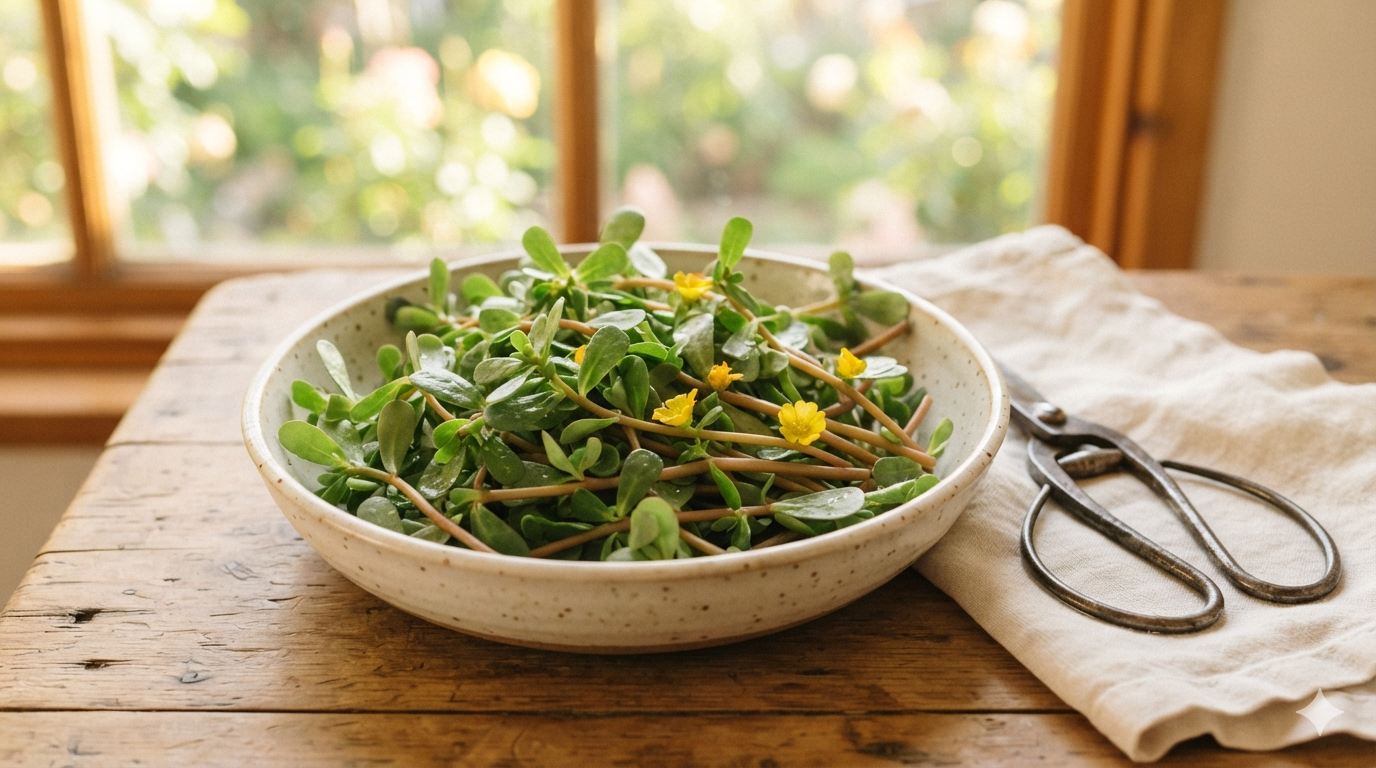
Before you go gathering greens for dinner, it helps to know exactly what you are looking for. Purslane (known scientifically as Portulaca oleracea) is a succulent, which means it has thick, juicy leaves that hold water, much like a jade plant or an aloe vera. It grows flat and low to the ground, spreading outward like a green mat. The stems have a distinct reddish-brown tint, and the leaves are smooth, shiny, and shaped a bit like small wooden paddles.
During the warm mid-summer months, you might even notice tiny, bright yellow flowers opening up in the sunshine. It loves heat and handles dry spells beautifully, which is why you always see it thriving in the exact places other plants die—like the cracks of your hot asphalt driveway or the driest corners of your vegetable garden.
A Friendly Note on Safety First: As with any wild plant, correct identification is absolutely essential before you take a bite. True purslane has a completely smooth stem and releases a clear, watery juice when snapped. If you break a stem and see a milky white sap, stop right there! That is a look-alike called spurge, which is toxic and will upset your stomach. Additionally, only harvest plants from areas you are certain have not been treated with chemical weed killers or frequented by the neighborhood dogs. When you are just starting out, showing a picture to a local gardening club or a knowledgeable friend is a wonderful way to build your confidence.
Once you know what to look for, you will start seeing it everywhere. And trust me, your body will thank you for finding it. Let us dive into some of the truly remarkable things this little green volunteer can do for your health.
1. It Is Brimming with Youth-Defending Antioxidants
As we get older, we hear a lot of talk about free radicals and oxidative stress. To put it simply, our bodies go through daily wear and tear from the environment, stress, and just the natural process of aging. Antioxidants are the internal clean-up crew that helps keep our cells feeling vibrant and strong.
Purslane happens to be absolutely bursting with these protective compounds. It contains significant amounts of beta-carotene, vitamin C, and alpha-tocopherol (a highly active form of vitamin E). But the real hidden gem here is glutathione, a powerhouse antioxidant that supports liver health and helps protect our immune system. Unlike some health greens that taste like bitter medicine, purslane has a lovely, crisp texture and a mild, bright flavor that blends beautifully into ordinary meals.
2. Think of It as a Free, Fresh Multivitamin
If your kitchen counter looks anything like mine, you probably have a few bottles of vitamins and mineral supplements sitting near the coffee maker. While those certainly have their place, our bodies always prefer to absorb nutrients from real, whole foods when possible.
Purslane acts like a natural multivitamin growing right outside your kitchen door. It is rich in essential macrominerals that many of us do not get quite enough of as we age. A simple serving provides a wonderful natural boost of:
- Magnesium: Crucial for keeping our bones strong and maintaining healthy blood pressure.
- Calcium: Excellent for skeletal strength and proper muscle function.
- Potassium: A vital mineral that helps regulate fluid balance and protects our hearts.
- Iron: Essential for keeping our energy levels up and carrying oxygen through our blood.
3. A Goldmine of Heart-Healthy Omega-3 Fatty Acids
Most of us have been told by our doctors to get more omega-3 fatty acids into our diets to help protect our hearts and keep our joints moving smoothly. Usually, that means buying expensive salmon, dealing with fish oil capsules, or trying to swallow large spoonfuls of flax seeds.
Remarkably, purslane contains more omega-3 fatty acids (specifically alpha-linolenic acid, or ALA) than any other leafy green vegetable ever tested. In fact, it holds its own against many seed oils. These healthy fats are famous for supporting cardiovascular wellness, maintaining sharp cognitive function as we collect birthdays, and helping soothe systemic inflammation throughout the entire body. It is a wonderful, plant-based way to look after your tickers without spending a fortune at the seafood counter.
4. Gentle, Natural Support for Your Cholesterol Goals
Keeping an eye on our cholesterol numbers becomes a regular topic of conversation during annual checkups once we cross the 50-year milestone. While diet, exercise, and prescribed treatments are the foundation of heart health, adding traditional dietary greens like purslane can be an excellent supporting player.
Emerging research and traditional dietary patterns both suggest that regularly enjoying purslane can have a positive influence on our lipid profiles, helping to keep our LDL (often called the “bad”) cholesterol in check. It is full of soluble dietary fiber, which naturally binds to cholesterol in the digestive tract and helps escort it out of the body. It feels like a very tasty, comforting insurance policy for your blood vessels.
5. The Ultimate Remedy for the Dreaded Caffeine Jitters
I love my morning routine, and a hot cup of coffee is a non-negotiable part of how I start my day. However, I have noticed that as the years go by, my tolerance for caffeine has changed. Every now and then, if I pour that second cup a little too late in the morning, I end up feeling incredibly wired, shaky, and anxious.
In traditional herbal practices throughout Asia and Europe, purslane has long been valued for its unique cooling and grounding qualities. Many people find that eating a small handful of fresh, crisp purslane leaves helps calm the nervous system and takes the sharp edge off a caffeine overdose. It is not an instant magic trick, but the natural combination of magnesium and potassium works beautifully to help soothe tense muscles and bring your body back down to earth.
6. It Contains Natural Melatonin to Help You Sleep Soundly
Let us be honest: a good night of uninterrupted sleep can feel a bit harder to come by these days. We toss, we turn, and we look at the clock at 3:00 AM wondering why our brains refuse to shut down. Before you turn to heavy over-the-counter sleep aids that leave you feeling groggy the next morning, purslane might be worth a try.
This clever little succulent is one of the few plants that naturally contains melatonin—the very same hormone our brains produce to signal that it is time to rest. By incorporating a handful of purslane leaves into your evening dinner salad, you are giving your body a gentle, botanical nudge toward a deeper, more peaceful slumber. I started doing this a few weeks ago, and I have felt much more refreshed when the morning sun comes through the window.
7. A Soothing Friend for Headaches and Migraines
There is nothing quite like a nagging tension headache to ruin a perfectly lovely afternoon. Many tension headaches and migraines are closely tied to a lack of dietary magnesium, which causes the blood vessels in our necks and heads to constrict and tighten up.
Because purslane is packed with easily absorbable magnesium, adding it to your regular diet can help keep those blood vessels relaxed and happy. It is certainly not a replacement for medical care or targeted therapies if you suffer from severe chronic migraines, but ensuring your body is well-stocked with natural magnesium is a wonderful, proactive way to reduce the frequency of those painful days.
8. A Natural Boost for a Bright, Happy Mood
Have you ever noticed how your mood can dip during times of stress, or when the weather turns gray and gloomy? Purslane contains a lovely amount of tryptophan, an essential amino acid that our bodies use to manufacture serotonin—the famous “feel-good” brain chemical that promotes feelings of happiness, calm, and emotional stability.
When you combine that tryptophan with the plant’s high levels of omega-3s and magnesium (both of which are known to support brain health), you have a natural recipe for emotional resilience. It is genuinely comforting to think that a plant most people step on or spray with chemicals is actually packed with everything we need to feel a little brighter and more balanced every day.
How to Harvest and Enjoy Your Backyard Superfood
Ready to give it a try? Harvesting purslane is as easy as it gets. Simply take a pair of clean kitchen scissors and snip off the tender top sections of the stems, leaving the roots in the ground so the plant can keep growing for your next harvest. The younger stems and leaves are the most tender and have the mildest flavor. Give them a thorough wash in a bowl of cold water to remove any garden soil, and pat them dry with a clean kitchen towel.
You can use purslane in almost any dish that calls for greens. Here are a few wonderfully simple ways to welcome it into your kitchen:
- Keep It Fresh: Toss a handful of the raw leaves into a traditional Greek salad with juicy tomatoes, crisp cucumbers, kalamata olives, and a crumble of feta cheese. The tart flavor matches beautifully with a simple olive oil and lemon dressing.
- A Quick Sauté: Heat a splash of olive oil in a skillet, throw in a minced clove of garlic, and toss the purslane around for just sixty seconds until it wilts slightly. It makes a magnificent side dish for grilled chicken or baked fish.
- Thicken Your Soups: Purslane has a natural ability to gently thicken liquids when cooked. Chop a handful and drop it into your favorite vegetable or chicken noodle soup during the last ten minutes of simmering.
- Backyard Pesto: Blend the leaves with some walnuts, garlic, parmesan cheese, and olive oil for a bright, lemony twist on traditional basil pesto that tastes wonderful over whole-wheat pasta.
The flavor is delightfully unique—clean, slightly citrusy, and just a little bit peppery, with a satisfying crunch that holds up much better than delicate lettuces.
Working with Nature Instead of Fighting It
Beyond what it does for our bodies, leaving a little purslane in the garden is actually wonderful for the soil. Because it handles droughts with ease, it acts like a living mulch, shading the bare earth, keeping moisture in the ground, and preventing the wind from blowing your good garden soil away. It requires absolutely no watering, no fertilizer, and no fussing over.
Instead of spending our precious energy and weekends fighting against what naturally wants to grow, we can shift our perspective. Nature is incredibly generous, often delivering exactly what we need right to our doorsteps completely free of charge.
So, the next time you are out in the yard and see those familiar reddish stems creeping along the edge of your walkway, take a deep breath and put the weed killer away. Grab your kitchen shears instead. Start small by adding just a few leaves to your lunchtime sandwich or your dinner salad, and see how you like it. You might just find that your new favorite summer superfood has been waiting for you in the backyard all along. Happy foraging, everyone!
Important Note:
This article is written for entertainment and general informational purposes only. The stories, ideas, and information shared here are meant to be interesting, thought-provoking, or enjoyable to read.
Nothing in this article should be considered professional advice of any kind — whether medical, legal, financial, psychological, or otherwise. The content on this blog is not a substitute for consulting with qualified professionals.
Always do your own research and speak with a trusted expert before making any important decisions in your life. The author and publisher of this blog are not responsible or liable for any actions you take (or do not take) based on the information in this article.
Information and stories may be based on personal experiences, public sources, or creative interpretation. While we aim to share content that is accurate and respectful, we cannot guarantee that everything will be completely up to date or suitable for every reader’s situation.
By continuing to read this blog, you understand and agree that this content is for entertainment only.
Leave a Reply