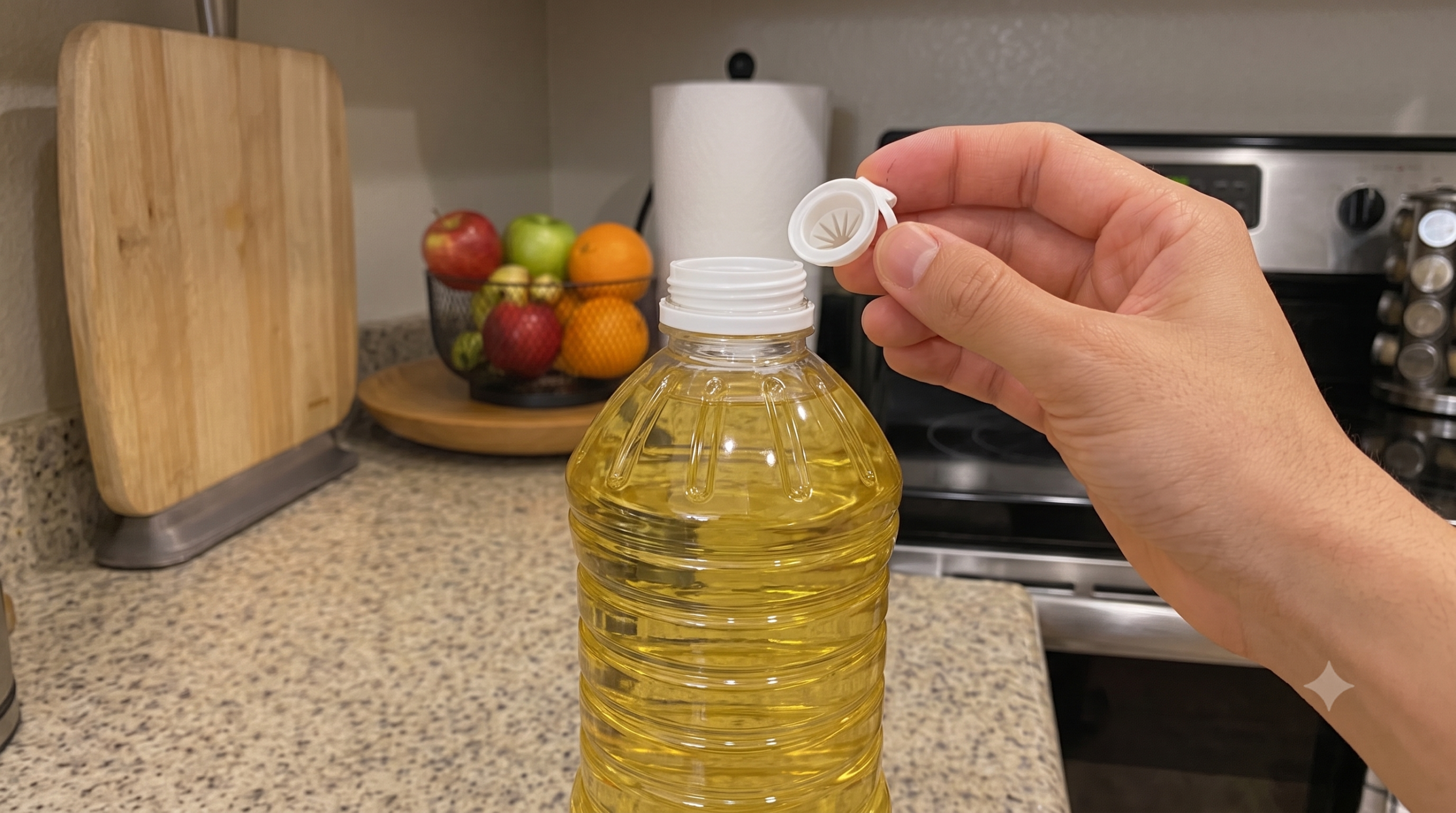
Let’s be completely honest for a moment. We have all developed certain subconscious routines in the kitchen over the years. You walk through the grocery store, select your favorite brand of olive oil, and bring it home to your pantry. The very next time you prepare a meal, you twist off the plastic cap. Then, you reach for that little plastic pull tab seal, rip it out with a firm tug, and toss it straight into the garbage can without a single thought.
I did exactly this for decades. It never once crossed my mind that I might be throwing away something incredibly useful. To me, that little plastic ring was nothing more than a minor piece of protective packaging. It was simply an obstacle standing between me and my cooking ingredients. However, a few months ago, a friend showed me a hidden kitchen trick that completely changed how I look at everyday food packaging. It honestly stopped me right in my tracks while I was preparing a Sunday family dinner.
If you have been throwing these tabs away your entire life, you are definitely going to appreciate this simple piece of household wisdom. This little adjustment is one of those wonderful “why didn’t anyone tell me sooner” moments. It costs absolutely nothing, yet it makes everyday cooking so much smoother, cleaner, and more enjoyable. Let’s look closely at why manufacturers put those pull tabs in the bottles, and how a simple flip can transform your daily culinary routine.
—
The Official Job of the Humble Pull Tab
Before we look at the secret secondary use for this piece of plastic, we should look at its primary purpose. That little pull tab serves as a vital tamper-evident seal. When you are browsing the grocery store shelves, that sealed ring gives you absolute peace of mind. It tells you that the bottle has not been opened, contaminated, or altered since it left the production facility.
In addition to safety, the seal plays a massive role in maintaining food quality. High-quality cooking oils, especially extra virgin olive oil, are highly sensitive to oxygen and light. Exposure to air causes oil to oxidize, which quickly degrades the flavor and robs it of its healthy antioxidants. This plastic barrier seals in the freshness, ensures a long shelf life, and prevents messy leaks during shipping and handling.
For most home cooks, the journey ends right there. You pull the ring, hear that satisfying plastic tear, and move on with your recipe. But if you pause and look at the physical shape of that little tab, you will realize that it possesses a surprisingly clever secondary design feature. It is a feature that almost nobody talks about, yet it fixes one of the most annoying problems in the kitchen.
—
The Great Kitchen Nuisance: The Heavy Pour
Have you ever tried to add just a tiny splash of canola oil to a hot skillet, only for a massive wave of liquid to come rushing out all at once? We have all been there. You tilt the bottle just a fraction too far, and suddenly your frying pan is flooded. This unexpected rush of oil creates a real mess. It leads to splatters all over your clean stovetop, and it can completely ruin the balance of a delicate dish.
This happens because standard cooking oil bottles feature very wide openings. The large mouth is excellent for filling the bottles quickly at the factory, but it makes precise pouring incredibly difficult at home. This is particularly true for those of us who might be dealing with a bit of arthritis or reduced grip strength in our hands. Trying to balance and tilt a heavy, slippery glass bottle with pinpoint precision can feel like a stressful balancing act.
To solve this dilemma, many specialty shops sell expensive, aftermarket metal pour spouts. You have likely seen them in fancy restaurants or high-end kitchens. They feature a tiny air tube that creates a slow, elegant stream of oil. But why should you spend extra money on a separate kitchen gadget when the solution is already sitting right inside your bottle? That is where our little plastic pull tab comes into play.
—
The Brilliant Trick: Simply Flip It and Twist It
The next time you crack open a fresh bottle of cooking oil, take a deep breath and step away from the trash can. Instead of throwing the pull tab away, you are going to give it a second chance at life. Hold the plastic ring in your fingers, flip it completely upside down so the pull-ring loop faces downward, and gently press it back into the neck of the bottle.
When I first heard about this method, I was highly skeptical. I assumed the plastic piece would simply fall right into the oil, creating an even bigger headache for me to fish out with a fork. However, I decided to give it a try with a new bottle of avocado oil. To my absolute delight, the tab wedged firmly into the opening, staying perfectly secure.
The transformation was immediate and incredibly satisfying. When I tilted the bottle to dress a fresh salad, the oil no longer came out in an uncontrollable, messy torrent. Instead, it traveled around the inverted plastic tab, escaping through the small gaps on the sides. It created a beautifully thin, steady, and highly controlled stream of oil. It instantly turned my standard, inexpensive grocery store bottle into a professional-grade culinary tool.
—
Real Kitchen Moments Where This Hack Saves the Day
Once you adopt this habit, you will quickly realize how much stress it removes from your daily meal preparation. There are several common cooking scenarios where having a controlled pour makes a massive difference in your results:
- Drizzling Over Fresh Greens: There is nothing worse than spending time tossing a beautiful summer salad, only to accidentally drown the crisp lettuce in a pool of heavy oil. This trick allows you to apply a light, elegant misting of oil, keeping your vegetables wonderfully crisp and vibrant.
- Sautéing with Confidence: When you are heating up a skillet for a stir-fry or searing a piece of fish, you only need a thin layer of fat to coat the pan. A slow pour ensures you do not overdo it, which prevents dangerous hot oil splatters from popping out onto your skin or your countertops.
- Roasting Garden Vegetables: For beautifully browned broccoli, carrots, or potatoes, you want to coat the vegetables evenly before they go into the oven. The slow-flow tab allows you to drizzle the oil smoothly across the entire baking sheet, ensuring every piece gets just the right amount of coverage.
- Crafting Homemade Dressings: Creating a flawless emulsion for a classic vinaigrette requires you to whisk vigorously while adding oil in a slow, continuous thread. This inverted tab does the hard work for you, regulating the stream so your dressings never separate.
—
A Warm Nod to Frugality and Household Wisdom
There is a deeper reason why a trick like this resonates so strongly with many of us. We grew up in a time, or were raised by parents, who deeply understood the value of resourcefulness. We learned that you do not always need to rush out to a store to buy a complicated plastic solution for a simple problem. True kitchen wisdom is about looking at what you already have and finding a clever way to make it work harder for you.
Using the pull tab insert is also an excellent way to protect your household budget. Cooking oils, particularly specialty olive and nut oils, have become quite an investment at the supermarket lately. When you accidentally over-pour, you are quite literally washing your hard-earned money down the drain. By regulating the flow, a single bottle lasts significantly longer. It cuts down on food waste and keeps extra cash in your wallet over the course of the year.
Furthermore, it is an excellent tool for anyone keeping a close eye on their nutritional health. Oil is a wonderful, heart-healthy fat, but it is incredibly calorie-dense. A heavy hand can easily add hundreds of unintended calories to an otherwise light, nutritious dinner. This simple physical barrier helps you stay mindful of your portions without requiring you to constantly pull out measuring spoons and dirty more dishes.
—
Pro-Tips for Masterful Pouring Success
As you begin experimenting with this technique in your own kitchen, it is helpful to keep a few practical pointers in mind. Not every single bottle is manufactured in the exact same factory, so a little bit of common-sense adjustments can go a long way:
- Give it a Quick Wipe: Before you press the tab back into the neck of the bottle, make sure your fingers are dry. If the ring is already covered in slick oil, it can be a bit trickier to position correctly.
- Use a Gentle Touch: You do not need to ram the plastic piece down into the bottle with force. A gentle, steady push is all it takes to wedge the plastic prongs against the interior walls of the opening.
- Check the Bottle First: Some premium brands have caught on to this consumer desire and now build permanent plastic crossbars or flow restrictors directly into the plastic cap assembly. If your bottle already has one of these structures, you can go ahead and discard the tab as usual.
- Keep a Spare in the Drawer: Because these little pieces are so lightweight, it can be handy to wash and save one or two clean ones in your kitchen utility drawer. That way, if a tab accidentally slips or gets damaged, you always have a backup ready to go.
—
Discovering Joy in the Smallest Corners of Life
It is truly fascinating how much joy can be found in correcting the tiniest daily annoyances. Our modern world is full of high-tech gadgets, buzzing smartphones, and complicated appliances that promise to make our lives easier. Yet, more often than not, those things just add extra clutter to our countertops and more manuals to our drawers.
The flipped pull tab is the exact opposite of that modern clutter. It is an elegant, quiet, and completely free solution hiding in plain sight. It reminds us that the world is full of thoughtful little design details waiting to be discovered. Once you start utilizing this method, it becomes second nature. You will find yourself showing it to your children, your neighbors, and anyone else who loves a good, old-fashioned household shortcut.
So, the next time you prepare a warm, comforting meal for yourself or your loved ones, take a moment to enjoy the process. Twist open that new bottle, flip that tiny plastic tab, and enjoy the smooth, steady pour. Your salads will taste better, your kitchen counters will stay cleaner, and you will have a lovely little story to share over the dinner table. Happy cooking, and may your kitchen always be filled with warmth, laughter, and effortless pouring!
Important Note:
This article is written for entertainment and general informational purposes only. The stories, ideas, and information shared here are meant to be interesting, thought-provoking, or enjoyable to read.
Nothing in this article should be considered professional advice of any kind — whether medical, legal, financial, psychological, or otherwise. The content on this blog is not a substitute for consulting with qualified professionals.
Always do your own research and speak with a trusted expert before making any important decisions in your life. The author and publisher of this blog are not responsible or liable for any actions you take (or do not take) based on the information in this article.
Information and stories may be based on personal experiences, public sources, or creative interpretation. While we aim to share content that is accurate and respectful, we cannot guarantee that everything will be completely up to date or suitable for every reader’s situation.
By continuing to read this blog, you understand and agree that this content is for entertainment only.
Leave a Reply