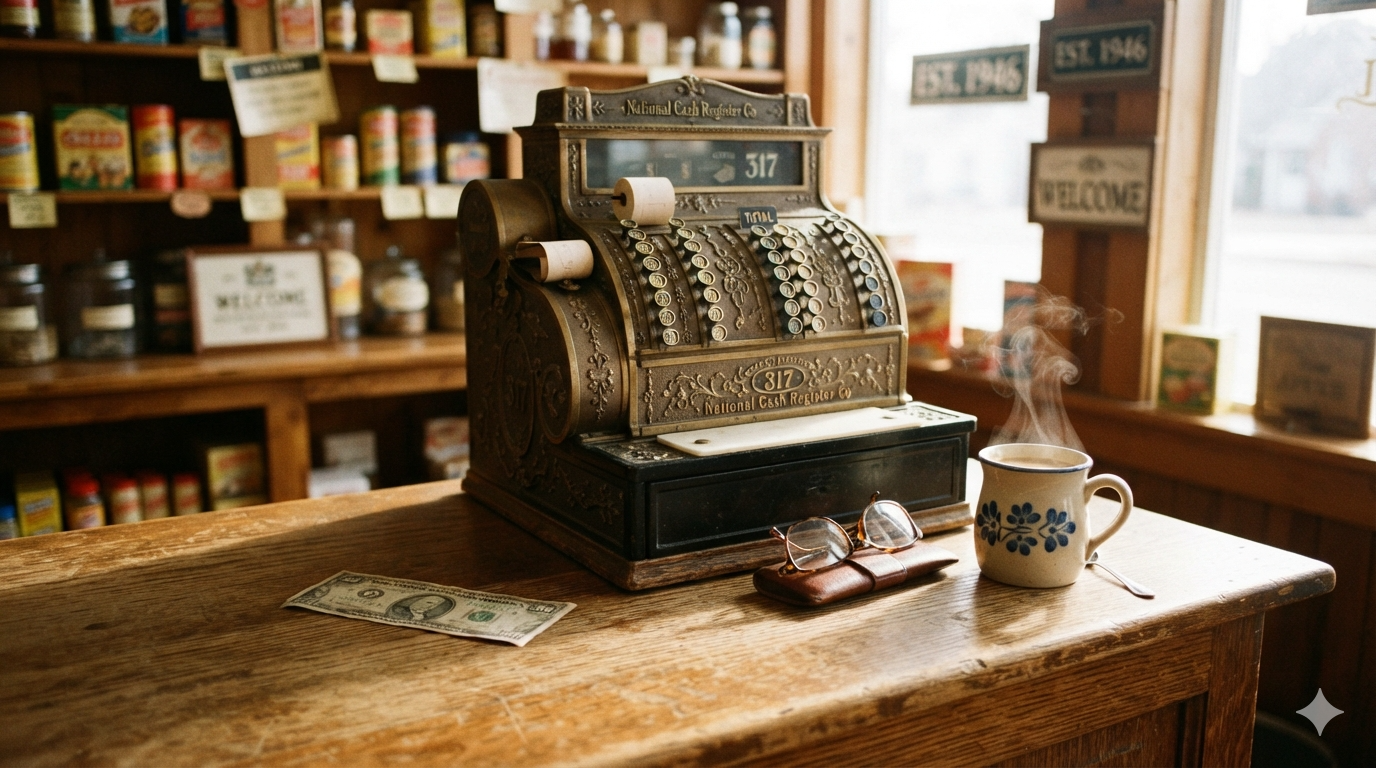
Do you remember those quiet rainy afternoons when we used to gather around the kitchen table with a deck of cards or a book of brain teasers? There was something so wonderful about sitting together, sipping a warm cup of tea, and trying to outsmart one another with clever little puzzles. Those moments weren’t just about finding the right answer. They were about the laughter, the friendly debates, and the joy of a good “aha!” moment when the pieces finally clicked into place.
Lately, the internet has revived that old-school love for puzzles, bringing back classic riddles that used to keep us guessing for hours. One particular math riddle has gone completely viral, jumping from Facebook feeds to family group chats. It is causing quite a stir, leaving thousands of smart, logical folks scratching their heads and good-naturedly arguing over the dinner table.
At first glance, it looks like a simple elementary school math problem. But don’t let its humble appearance fool you. It has managed to trip up accountants, teachers, and savvy shoppers alike. It proves that sometimes, our brains like to take the scenic route even when the path ahead is perfectly straight. Let’s look at the puzzle together and see if you can solve it on your first try.
—
The Scenario: A Sticky Situation at the General Store
Imagine a quiet afternoon at a cozy neighborhood shop. The sun is shining, the shelves are stocked, and the cashier is keeping an eye on the door. Then, a man walks in with mischief on his mind. Here is exactly what happens next:
The Riddle:
A man walks into a store and steals a crisp $100 bill right out of the cash register. The cashier doesn’t notice right away. A little later, the man returns to the store. This time, he acts like a regular customer. He selects $70 worth of merchandise and brings it to the counter. To pay for the items, he hands the cashier that exact same stolen $100 bill. The cashier accepts the money, puts it back into the register, and hands the man his $70 worth of goods along with $30 in cash as change.
Now, here is the big question that is causing all the fuss: How much money did the store actually lose?
Take a deep breath, grab a notepad if you need to, and think about it for a moment. Don’t rush. The beauty of these little brain workouts is in the journey, not just the destination.
—
The Answers That Most People Confidently Give (But Are Wrong!)
If you arrived at a number pretty quickly, you are in good company. Millions of people read this scenario and immediately shout out their answers with total confidence. However, this puzzle is a masterclass in misdirection. Let’s look at the two most common traps that catch almost everyone.
The “$200 Loss” Theory
This is by far the most popular answer on social media forums. People look at the story and break it down like this: First, the store lost $100 in cash when the man took it from the register. Then, the man came back and took another $70 in items and $30 in change, which feels like another $100 gone. When you add those two separate events together ($100 + $100), it seems completely logical that the store is out $200. It feels right, but it leaves out a crucial detail about where that original bill went.
The “$170 Loss” Theory
Another large group of folks arrives at $170. Their line of reasoning goes like this: The store definitely lost the initial $100 from the theft. Then, when the thief bought the items, the store gave away $70 worth of physical inventory. So, they add the $100 cash and the $70 merchandise together to get $170. They figure the $30 in change doesn’t count because the thief paid with a hundred-dollar bill. It sounds quite clever, but it still falls into the trap of double-counting the loss.
Did either of these numbers pop into your head? If they did, please don’t feel discouraged. Our brains are naturally wired to look for patterns and protect resources, so it makes total sense that we want to keep adding up the damages!
—
Let’s Break It Down Step-by-Step (Following the Money)
To find the true answer without getting overwhelmed by the story, we need to look at the situation just like an old-fashioned shopkeeper checking their ledger at the end of the day. We need to follow that single, specific $100 bill as it moves around the store. Let’s take it one simple step at a time.
Step 1: The Initial Theft
When the man reaches into the register and slips the $100 bill into his pocket, the store’s balance sheet takes a direct hit. At this exact moment, the cash drawer is short by exactly $100. If the story ended right here, the answer would be incredibly simple: the store lost $100. Keep this starting point in mind as we move forward.
Step 2: The Return and the Transaction
This is where the clever trick happens. The man walks back into the store. He isn’t bringing any new money with him; he only has the $100 bill that belongs to the store. He picks out $70 worth of items and hands the bill to the cashier.
When the cashier takes that $100 bill and drops it back into the register, something very important happens: The store gets its stolen money back. The register is no longer missing that original bill. The cash balance is restored to exactly where it was before the theft occurred.
Step 3: Handing Over the Goods and Change
Now, the cashier has the $100 bill safely in the drawer, but the transaction isn’t finished. To complete the sale, the cashier has to give the customer his purchases and his change. The cashier hands over:
- $70 worth of merchandise from the shelves.
- $30 in cold, hard cash from the register.
When you look at this final step, you can see exactly what walked out the front door for good. The store gave away $70 in products and $30 in cash change. If we do a quick bit of simple addition, $70 plus $30 gives us a grand total of $100.
—
The Final Reveal: The True Loss
When we look at the entire afternoon objectively, the answer becomes crystal clear. The store lost exactly $100.
No matter how many twists and turns the story takes, the thief walked into the store with nothing, and he walked out of the store with $70 worth of goods and $30 in cash. Everything he took in the end came directly from that single transaction, funded by the store’s own stolen money. The store didn’t lose a penny more than that original hundred dollars.
If you want to look at it from another angle, think about the thief’s pockets. At the start of the day, his pockets were completely empty. By the time he walked away from the shop and went home, his pockets contained $70 worth of merchandise and $30 in cash change. In total, he gained $100. Since he only took things from that one specific shop, whatever the thief gained must equal exactly what the store lost!
—
Why Our Wonderful Brains Get So Easily Tricked
If this puzzle made your head spin a little bit, you might be wondering why it is so incredibly effective at fooling us. It isn’t because we are bad at math. In fact, it has very little to do with math at all! Instead, it is a brilliant example of psychological misdirection.
Our minds naturally like to organize information by separating events into distinct, orderly compartments. When we read this riddle, we see two completely separate events: a crime (the theft) and a business transaction (the purchase). Because they happen at different times, our brains automatically create two separate mental folders for them. We instinctively think that each folder must have its own independent cost, so we try to add them together.
The trick relies entirely on the fact that the two events are intimately connected by the exact same piece of paper—that single $100 bill. Once that bill makes its way back into the cash register, it completely cancels out the financial loss of the first theft. It requires us to slow down, take a breath, and look at the big picture rather than reacting to the dramatic story of the crime.
—
Keep Your Mind Sharp and Have Some Fun With It
There is a wonderful benefit to spending a few minutes with these kinds of brain teasers. As we gather more life experience, our brains become incredibly efficient at taking shortcuts to save energy. We rely on our deep well of intuition to solve problems quickly. Most of the time, this is a fantastic superpower that helps us navigate daily life with ease. But every once in a while, it is incredibly fun and healthy to challenge those shortcuts and force our minds to look at things from a fresh perspective.
Puzzles like this cash register riddle serve as a gentle reminder that slowing down and double-checking our assumptions can lead to wonderful moments of clarity. They teach us to look past the surface noise and focus on what truly matters—a lesson that applies just as beautifully to life as it does to math.
The next time you are catching up with your kids, enjoying a Sunday brunch with close friends, or chatting with your neighbors, try sharing this little puzzle with them. Watch their faces as they work through the numbers, listen to the lively debates that unfold, and enjoy the collective laughter when the true answer finally dawns on everyone. It is a wonderful, lighthearted way to spark a deep conversation and share a joyful brain workout with the people you love most.
Important Note:
This article is written for entertainment and general informational purposes only. The stories, ideas, and information shared here are meant to be interesting, thought-provoking, or enjoyable to read.
Nothing in this article should be considered professional advice of any kind — whether medical, legal, financial, psychological, or otherwise. The content on this blog is not a substitute for consulting with qualified professionals.
Always do your own research and speak with a trusted expert before making any important decisions in your life. The author and publisher of this blog are not responsible or liable for any actions you take (or do not take) based on the information in this article.
Information and stories may be based on personal experiences, public sources, or creative interpretation. While we aim to share content that is accurate and respectful, we cannot guarantee that everything will be completely up to date or suitable for every reader’s situation.
By continuing to read this blog, you understand and agree that this content is for entertainment only.
Leave a Reply